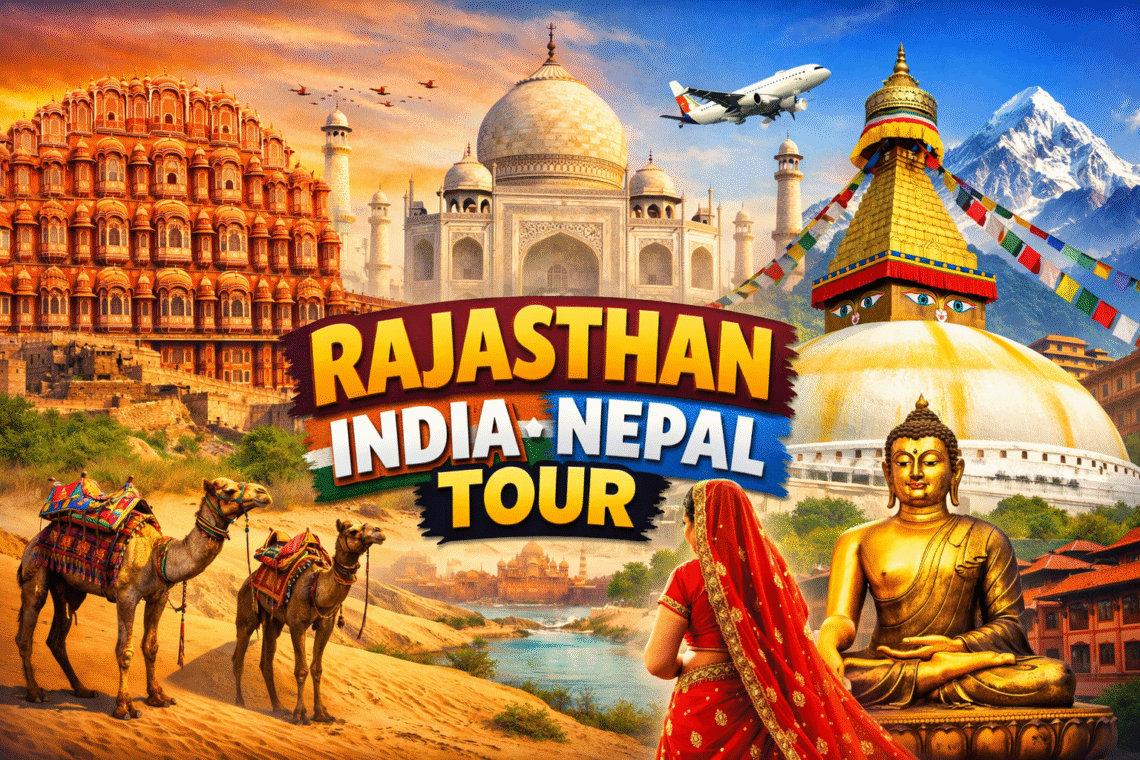
Connecting the arid, regal landscapes of India’s Rajasthan with the snow-capped peaks and spiritual sanctuaries of Nepal offers a travel experience of unparalleled contrast. This journey transitions from the “Land of Kings,” characterized by golden deserts and crimson forts, to the “Roof of the World,” where ancient stupas and Himalayan vistas dominate the horizon. For travelers seeking a comprehensive South Asian adventure, planning an efficient route is essential to balancing time, comfort, and cultural immersion.
The Royal Beginning Exploring Rajasthan
A well-structured itinerary typically begins in the heart of Rajasthan, where cities like Jaipur, Jodhpur, and Udaipur showcase the pinnacle of Rajput architecture. Starting in the “Pink City” of Jaipur allows travelers to explore the Amber Fort and Hawa Mahal before moving toward the desert charms of Jaisalmer or the romantic lakeside palaces of Udaipur. These locations are not merely historical sites; they are living museums where traditional folk music, vibrant textiles, and spicy Rajasthani cuisine provide a sensory feast.
To manage such an extensive journey, many travelers opt for curated rajasthan india nepal tour packages that bridge the gap between the two countries. These packages often include guided tours of the Mehrangarh Fort in Jodhpur and the Ranthambore Tiger Reserve, ensuring that the transition from India’s heritage to Nepal’s wilderness is seamless. Using a professional service like Namaste India 24 can help navigate the logistics of traveling across state and national borders, providing a structured yet flexible way to see the best of both worlds.
Crossing the Border Logistics and Routes
The distance between Rajasthan and Nepal is significant, spanning over 1,000 kilometers. Travelers have three primary options for making the crossing: air, rail, or road. Each mode of transport offers a different perspective on the changing landscape of Northern India as you head toward the Himalayas.
Flying is the fastest and most convenient method. While there are no direct international flights from Jaipur or Udaipur to Kathmandu, travelers can easily catch a connecting flight through Delhi. For those who prefer a more grounded experience, the rail route involves taking a train from Rajasthan to Gorakhpur in Uttar Pradesh. From Gorakhpur, it is a short bus or taxi ride to the Sunauli border, the most popular land entry point into Nepal. Crossing on foot at Sunauli is a unique experience, allowing you to walk directly into the town of Bhairahawa before catching a scenic bus or flight to Kathmandu or Pokhara.
Strategic Stopovers via Delhi
Since most travel routes from the west of India naturally funnel through the national capital, it is wise to incorporate a stopover in New Delhi. This allows travelers to break up the long journey and explore the Mughal wonders of the capital, such as the Red Fort and Qutub Minar. Selecting high-quality india tour packages from delhi can simplify this middle leg of the trip. By organizing transport and accommodation through Delhi, you can ensure a smooth departure toward the Nepalese border or the international airport.
Namaste India 24 specializes in these multi-destination transitions, often helping travelers coordinate their documents and transport so they can focus on the sights rather than the schedules. Whether you are taking the “Maitree Bus” service or a private car, having a reliable partner in the capital makes the journey significantly more comfortable.
The Spiritual Heights of Nepal
Upon entering Nepal, the atmosphere shifts from the regal grandeur of the plains to a serene, high-altitude spirituality. Kathmandu, the capital, is a hub of UNESCO World Heritage Sites, including the sacred Pashupatinath Temple and the massive Boudhanath Stupa. For those coming from the heat of the Thar Desert, the cool breeze of the Kathmandu Valley is a welcome change.
Beyond the capital, Pokhara serves as the gateway to the Annapurna range. It is the perfect place for reflection after the bustling energy of Rajasthan’s bazaars. Here, you can boat on Phewa Lake or embark on short treks to see the sunrise over the Himalayas. The contrast between the dry Aravalli Hills of Rajasthan and the lush, green foothills of the Himalayas provides a profound sense of the geographical diversity of the Indian subcontinent.
Essential Travel Tips for Indian Citizens
One of the greatest advantages for Indian travelers visiting Nepal is the ease of entry. Under the 1950 Indo-Nepal Treaty of Peace and Friendship, Indian citizens do not require a visa to enter the country. However, you must carry a valid photo identity document, such as an Indian Passport or a Voter ID card, especially when traveling by air.
When it comes to currency, Indian Rupees are widely accepted in Nepal, but it is important to carry smaller denominations like ₹100 notes, as larger bills (₹200, ₹500, and ₹2,000) are often restricted or subject to specific regulations. Additionally, remember that Nepal is 15 minutes ahead of Indian Standard Time—a small but important detail when catching flights or buses.
Finalizing Your Himalayan Adventure
Combining Rajasthan and Nepal into a single journey creates a narrative of history, religion, and nature that few other routes can match. From the camel safaris of Jaisalmer to the mountain trails of Nepal, every mile traveled reveals a new facet of Asian culture. By relying on established experts like Namaste India 24, you can navigate these diverse terrains with the confidence that your logistics are handled by professionals. Whether you are a solo adventurer or traveling with family, this cross-border expedition promises memories that will last a lifetime.