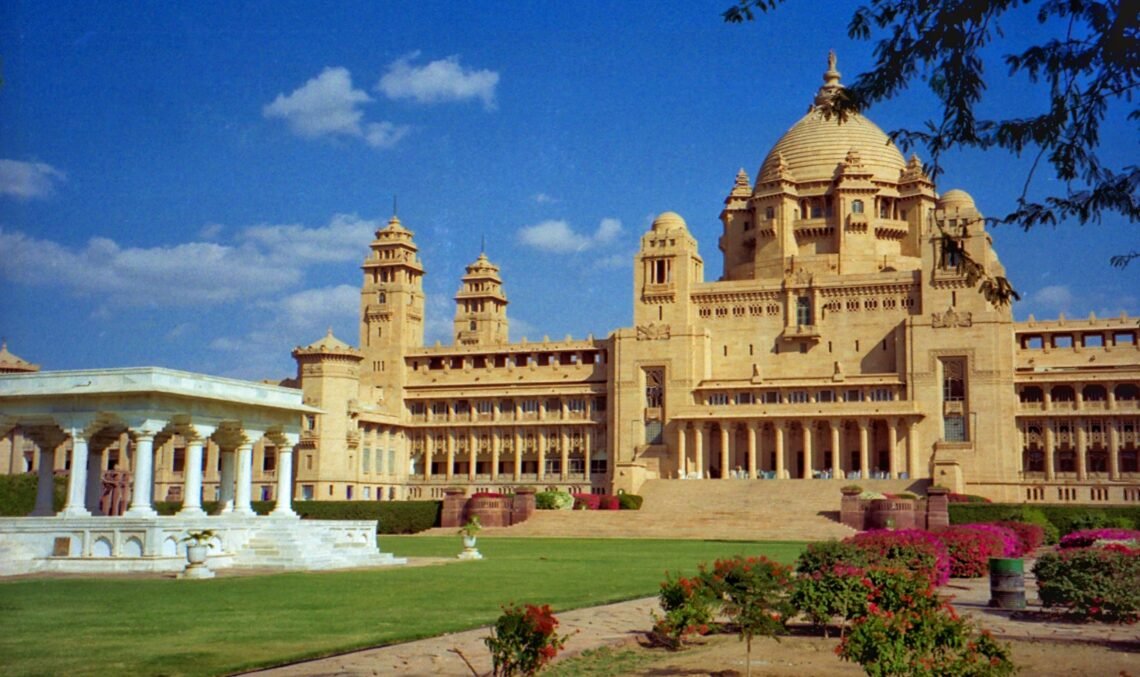
The Umaid Bhawan Palace stands as a golden-hued icon of Rajasthan’s royal heritage, perched atop Chittar Hill and overlooking the “Blue City” of Jodhpur. While a significant portion of the palace serves as a luxury hotel and the private residence of the royal family, the museum remains the primary gateway for travelers to witness the grandeur of the Rathore dynasty. Navigating this vast estate is best done with a reliable Jodhpur taxi service, ensuring you arrive comfortably at one of the world’s largest private residences. The museum is a curated journey through time, blending Art Deco elegance with the storied history of a kingdom that transitioned from medieval warfare to modern governance.
The Architectural Grandeur of Chittar Hill
Before stepping inside the museum, visitors are often struck by the sheer scale of the palace itself. Built between 1928 and 1943, the structure was a visionary project by Maharaja Umaid Singh, intended to provide employment to the local population during a period of severe famine. The use of “Chittar” sandstone gives the palace its unique golden glow. Unlike many other Indian palaces that favor marble and intricate floral carvings, Umaid Bhawan is a masterpiece of Art Deco and Beaux-Arts styles. The museum houses the original architectural drawings, allowing history buffs to see how the fusion of Western aesthetics and Indian sensibilities was brought to life by British architect Henry Lanchester.
The Royal Clock Collection
One of the most eccentric and fascinating sections of the museum is the Maharaja’s private collection of clocks. This isn’t just a display of timepieces; it is a gallery of mechanical wonders. From massive grandfather clocks to delicate, jewel-encrusted mantel clocks, the variety is staggering. Some clocks are designed as windmills, others as locomotives, reflecting the royal family’s fascination with European engineering. These artifacts are meticulously maintained, often still ticking away as they did nearly a century ago. For those on a structured Jodhpur sightseeing tour, this section serves as a highlight, showcasing a personal side of the royals that goes beyond politics and war.
Vintage Car Gallery
Located in the lush forecourt of the museum is a collection that makes every automobile enthusiast’s heart race. The Maharaja’s vintage car collection features some of the rarest vehicles in the world, including a classic Rolls Royce, a 1927 Buick, and several custom-built limousines. These vehicles were not just for show; they were the primary mode of transport for the royal family during state visits and grand processions. Seeing these cars in such pristine condition offers a glimpse into the lifestyle of an era where luxury was defined by bespoke craftsmanship. If you are traveling with a large group of fellow enthusiasts, booking a tempo traveller in jodhpur is a practical way to ensure everyone arrives at the museum gates together to enjoy these automotive marvels.
The Arms and Armoury Section
No Rajput palace museum is complete without a tribute to its martial history. The Umaid Bhawan Palace Museum features a dedicated space for arms and ammunition used by the Rathore warriors. The collection includes gold-plated swords, daggers with ivory hilts, and ancient shields decorated with precious stones. What makes this display unique is the juxtaposition of traditional Rajput weaponry with early 20th-century firearms. It tells a visual story of how the Jodhpur state evolved its military tactics over the centuries, moving from close-quarters combat to more modern defensive strategies.
Art Deco Interiors and Royal Portraits
As you walk through the museum galleries, the interior design itself becomes an exhibit. The high ceilings, polished marble floors, and chrome fixtures are quintessential Art Deco. The walls are adorned with large-scale portraits of the Maharajas and Maharanis, painted by renowned artists of the time. These portraits are more than just likenesses; they are historical records showing the changing fashions, from traditional Rajasthani attire to the more Westernized suits favored by the royals in the 1940s. The museum also displays rare photographs of the palace under construction, providing a rare “behind-the-scenes” look at the labor of thousands of artisans.
Symbolic Trophies and Natural History
A slightly more somber but historically significant part of the museum involves the taxidermy and hunting trophies. During the early 20th century, hunting was a traditional sport for Indian royalty and British officials. The museum displays several specimens that were once part of the royal hunts. Beyond the trophies, there are also displays of the local flora and fauna of the Marwar region, highlighting the royal family’s long-standing connection to the land and their efforts in conservation in the later years.
The Porcelain and Glassware Exhibit
The dining habits of the Jodhpur royals were legendary for their sophistication. The museum showcases an impressive array of fine bone china, Bohemian glassware, and silver cutlery used during state banquets. Many of these sets were custom-ordered from Europe and feature the Jodhpur state crest. The intricate designs on the plates and the clarity of the crystal glassware reflect the high level of hospitality that the palace was known for. It’s easy to imagine the grand halls filled with international dignitaries, dining under the soft glow of massive chandeliers.
Visiting Tips for a Seamless Experience
To truly appreciate the Umaid Bhawan Palace Museum, timing is essential. The museum is generally open from 9:00 AM to 5:00 PM. Since it is one of the most popular spots in the city, arriving early helps you avoid the midday crowds. The sun can be quite strong on Chittar Hill, so carrying water and wearing comfortable footwear is advised, as there is a fair amount of walking involved between the galleries and the car collection. Hiring a professional guide at the entrance can also add depth to your visit, as they share anecdotes and legends that aren’t always found on the plaques.
The Umaid Bhawan Palace Museum is more than just a building; it is a living chronicle of Jodhpur’s soul. From the mechanical precision of its clocks to the sheer power reflected in its vintage cars, every corner of the museum tells a story of a kingdom that embraced the future without ever forgetting its heroic past. Whether you are a history student, an architecture lover, or simply a traveler seeking beauty, a trip to this museum is the cornerstone of any Jodhpur itinerary.