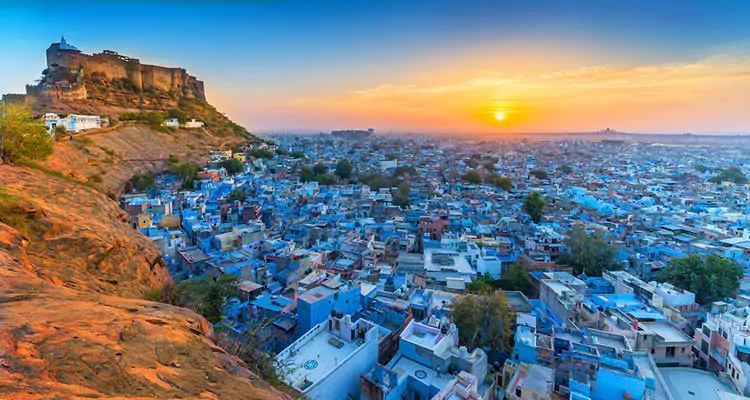
When you stand at the towering ramparts of Mehrangarh Fort and look down at the sprawling landscape below, you are immediately greeted by a mesmerizing sea of azure. Jodhpur, universally celebrated as the Blue City of India, offers one of the most iconic urban panoramas in the world. But why is Jodhpur painted blue? Visitors often assume it is purely an aesthetic choice, a modern tourism gimmick, or perhaps a homage to the sky. However, as local experts at Jodhpur Taxi Services can attest, the true reasons are deeply rooted in sociology, environmental adaptation, and indigenous chemistry. If you are planning to explore this magnificent destination, booking a reliable taxi service in jodhpur is the best way to navigate the bustling, vibrant streets while uncovering the layers of history hidden behind every blue-washed wall. Let us dive into the three primary pillars—castes, climate, and copper—that explain why Jodhpur remains the Blue City today.
The Social Marker: Brahmins and the Caste System
To understand the origins of Jodhpur’s blue architecture, one must travel back several centuries to the city’s foundational years. Historically, the color blue was used as a distinct social marker within the rigid Hindu caste system. The Brahmin community, which is traditionally considered the highest caste consisting of priests, scholars, and teachers, painted their homes blue to differentiate their residences from those of the lower castes. This practice was particularly prominent in the Brahmpuri neighborhood, a historic settlement situated directly at the base of the Mehrangarh Fort. The blue color was a sign of purity, sanctity, and high social standing. When wandering through these ancient quarters, you can still see the original indigo facades that have stood the test of time. Over the decades, however, this architectural tradition transcended caste boundaries. As non-Brahmins recognized the functional benefits of the blue paint, they too began to adopt the color. Today, the blue walls are less about social division and more about a shared cultural heritage that unites the residents of the old city.
Conquering the Thar Desert: The Climate Factor
While the social origins of the blue houses are fascinating, the geographical realities of Rajasthan offer a compelling, practical explanation. Jodhpur is located on the edge of the harsh, arid Thar Desert, where summer temperatures regularly soar above forty-five degrees Celsius. In an era long before air conditioning and electric fans, the residents had to rely on architectural ingenuity to survive the brutal heat. The blue paint applied to the exteriors and interiors of these homes acts as a natural thermoregulator. Light blue hues possess a high albedo, meaning they effectively reflect the sun’s scorching ultraviolet rays rather than absorbing them. This reflection significantly reduces the heat absorbed by the stone and brick walls, keeping the interiors noticeably cooler during the peak summer months. It is a brilliant example of traditional, climate-responsive architecture. If you are traveling with a large family or a group of friends during the warmer months, ensuring your comfort is paramount. You can easily rent a spacious tempo traveller in jodhpur to comfortably transport your group to the old city, where you can step out and immediately feel the cooling effect as you walk into the shaded, blue-tinted alleyways.
The Indigenous Chemistry: Copper Sulphate and Termite Protection
The third, and perhaps most scientifically intriguing, reason for Jodhpur’s blue identity lies in ancient pest control methods. The old houses of Jodhpur, particularly those built with traditional limestone and wood, were highly susceptible to termite infestations. Termites and other wood-boring insects are a significant structural menace in this dry region. To combat this destructive problem, the early builders and homeowners mixed copper sulphate into their standard white limestone wash. Copper sulphate, historically known as “neela thotha” in local parlance, is naturally bright blue. When combined with the whitewash, it produced the striking indigo hue that now blankets the city. More importantly, this chemical mixture acted as a highly effective, long-lasting insect repellent. It prevented termites from destroying the wooden beams, doors, and window frames that were integral to the structural integrity of the homes. Even today, many locals continue this practice, utilizing the traditional mixture not just for its aesthetic appeal but for its proven ability to protect their ancestral properties from pests.
Experiencing the Blue City Today
Today, the legacy of castes, climate, and copper has merged into a spectacular visual identity that defines Jodhpur on the global tourism map. The old city, particularly the Navchowkiya area, offers the most dense and vibrant concentration of blue houses. Navigating these narrow, winding streets is like walking through a living museum where every corner presents a perfect photographic opportunity. The intricately carved doorways, the welcoming smiles of the locals, and the overarching blue canopy create an atmosphere that is both serene and energetic. To truly appreciate the depth of this cultural phenomenon, visitors need a well-planned itinerary that allows them to explore without feeling rushed or lost in the labyrinthine alleys. Booking a comprehensive jodhpur day tour ensures that you are guided by knowledgeable locals who can share these historical anecdotes firsthand. They can take you to the best vantage points, explain the architectural nuances, and ensure you experience the authentic heart of the city safely and comfortably.
Conclusion
The blue houses of Jodhpur are much more than a pretty backdrop for travel photographs. They represent centuries of social history, an ingenious adaptation to a relentless desert climate, and a clever application of natural chemistry to protect homes. As you plan your visit to this majestic Rajasthan destination, remember the fascinating interplay of castes, climate, and copper that gave birth to the Blue City. Trust Jodhpur Taxi Services to be your perfect travel companion as you uncover the enduring magic of Jodhpur.