Immerse yourself in a culture where conservation isn’t a modern trend, but a centuries-old way of life. When planning your custom itinerary with a trusted travel agency in Rajasthan, a journey into the heart of the Bishnoi villages near Jodhpur stands out as a profoundly moving experience. Founded in the 15th century by Guru Jambheshwar, the Bishnoi community lives by 29 sacred principles dedicated to protecting nature, wildlife, and trees. This immersive cultural excursion offers an authentic look at rural India, where local communities live in absolute harmony with the environment.
Witnessing Rare Wildlife in Their Natural Habitat
One of the most remarkable aspects of a Bishnoi village excursion is how closely you can encounter wild animals without fences or barriers. Because the community strictly forbids hunting and harms no living creature, the local wildlife exhibits an extraordinary lack of fear around humans.
Chinkara and Blackbuck Sightings
As you traverse the semi-arid terrain, you will frequently spot herds of Blackbucks and Chinkaras (Indian Gazelles) grazing peacefully near the traditional mud huts. The sight of these elegant antelopes thriving alongside human settlements is a powerful testament to the community’s protective ethos.
Migratory Birds at Guda Bishnoi Lake
A visit to the scenic Guda Bishnoi Lake is a paradise for birdwatchers. Depending on the season, this natural water sanctuary attracts numerous migratory and resident species. You can expect to observe:
- Demoiselle Cranes migrating from Siberia
- Vibrant Kingfishers hunting near the banks
- Peafowls roaming freely through the village clearings
- Black-necked Storks wading through the shallows
Experiencing the Traditional Opium Ceremony (Amal Sabha)
To truly appreciate the social fabric of the region, participating in an Amal Sabha is essential. This ancient ritual is often included in a comprehensive jodhpur full day tour and serves as a symbol of hospitality, friendship, and conflict resolution among the village elders.
During this traditional gathering, opium is filtered through a meticulous process and offered to guests from the palm of the host’s hand. Sitting in a circle with the village elders provides a rare opportunity to listen to oral histories, understand their daily lives, and experience a custom that has remained unchanged for generations. It is a gesture of deep respect and welcoming that bridges the gap between travelers and locals.
Observing Indigenous Art and Master Craftsmanship
The artistic heritage of the region is deeply tied to daily utility and natural materials. Visiting the homes of local artisans allows you to witness the incredible skill passed down through generations.
The Potters’ Wheel
In the pottery hamlets, master craftsmen demonstrate how they mold local clay into beautiful, functional earthenware using manual wooden wheels. Visitors can try their hand at shaping the clay, learning how these insulated vessels are perfectly designed to keep water cool during the harsh desert summers.
Traditional Durrie Weaving
The Salawas village within the Bishnoi region is world-renowned for its exquisite hand-woven rugs, known as durries. Utilizing local camel hair and cotton, these weavers create intricate geometric patterns inspired by desert landscapes. Witnessing the rhythm of the handloom and interacting with the weavers provides direct insight into an industry that sustains entire families.
Exploring Architecture and Eco-Friendly Livelihoods
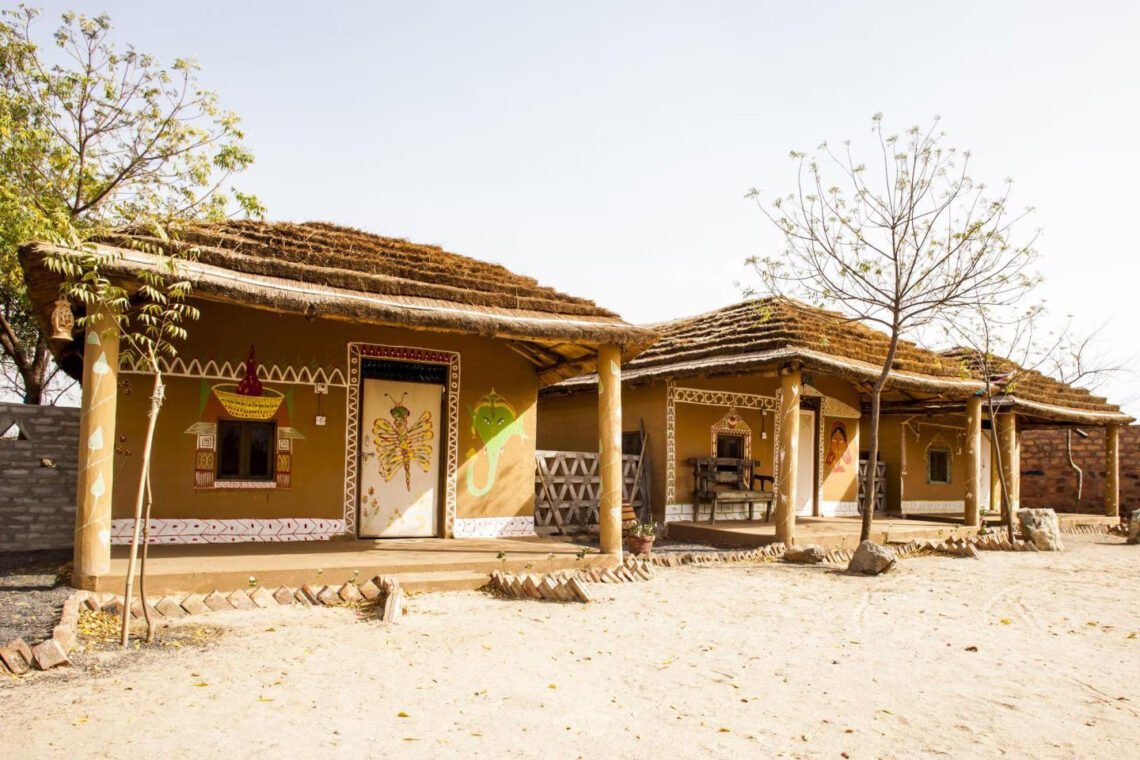
The architectural layout of a Bishnoi home is a masterclass in sustainable living. Known as Dhanis, these clusters of circular huts feature thatched roofs and walls plastered with a mixture of clay and cow dung, which acts as a natural insulator against the desert heat.
Inside a Traditional Dhani
Stepping inside a spotless Bishnoi home reveals a lifestyle rooted in minimalism. The interiors are remarkably cool, exceptionally clean, and designed to minimize waste. The residents will proudly show you their traditional grain storage structures and explain how their daily chores rely entirely on renewable resources.
The Sacred Khejri Trees
No visit is complete without understanding the community’s profound spiritual connection to the Khejri tree. In 1730 AD, 363 Bishnois sacrificed their lives to protect these trees from being cut down by the Maharaja’s men. Today, these resilient trees remain heavily guarded by the locals, providing shade, fodder, and stabilization to the delicate desert ecosystem.
Crafting Your Desert Itinerary
A journey to these eco-villages offers more than just sightseeing; it delivers a profound lesson in environmental stewardship that stays with you long after you leave. For travelers looking to explore the deeper cultural roots of the desert state, incorporating this experience into a broader Rajasthan heritage tour ensures a balanced look at both majestic royal palaces and the resilient rural communities that define the region’s true identity. Engaging with local guides from the area ensures that your visit directly supports the community, preserving this unique way of life for future generations.