Jaisalmer rises out of the Thar Desert with warm yellow sandstone architecture, earning its fitting title as India’s Golden City. Centuries of trans-Saharan and Silk Road trade routes shaped its culture, leaving behind grand fortifications, opulent merchant mansions, and spiritual sanctuaries that continue to welcome travelers from around the world.
Planning an itinerary through this desert region requires balancing cultural discovery in the heart of town with the stark, open beauty of the dunes. Whether you are seeking historic architecture or unforgettable open-air excursions, here are the top five sights to experience in Jaisalmer, Rajasthan.
1. Jaisalmer Fort (Sonar Qila)
Dominating the skyline from atop Trikuta Hill, Jaisalmer Fort was founded in 1156 AD by Rajput ruler Rawal Jaisal. Recognized as a UNESCO World Heritage site, it stands out as one of the world’s few remaining living forts, housing roughly one-quarter of the old city’s population within its 99 imposing bastions. Walking through its massive gateways brings you into a vibrant, labyrinthine neighborhood of traditional homes, rooftop cafes, spice stalls, and the historic Fort Palace Museum.
The interior of the fortress also preserves seven interconnected Jain temples built between the 12th and 15th centuries. The temples feature detailed friezes, intricately sculpted pillars, and vaulted ceilings carved directly out of the local yellow sandstone. Exploring the ramparts in the late afternoon offers panoramic views over the golden rooftops of the lower city just as the sunset bathes the fortress walls in a deep amber glow.
2. Patwon Ki Haveli
Constructed during the 19th century by a wealthy brocade and jewelry merchant, Patwon Ki Haveli is a cluster of five distinct mansions that highlight the pinnacle of local stone craftsmanship. The intricate stone latticework, known locally as jali, covers the building’s exterior facades, jharokhas (balconies), and courtyard walkways.
Inside, restored museum rooms display period furniture, vibrant traditional mural remnants, silver artifacts, and historical costumes that offer insight into the lifestyle of elite Marwari trading families. The precision of the carved sandstone screens served both decorative and climate-control purposes, permitting cooling cross-breezes while filtering out intense desert sunlight.
3. Gadisar Lake
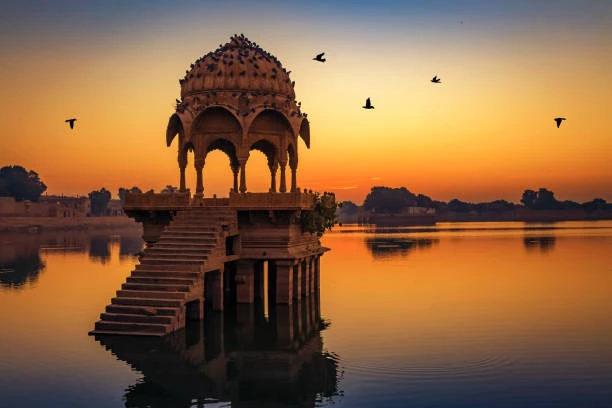
Constructed in the 14th century by Maharawal Gadsi Singh, Gadisar Lake served as the primary rainwater harvesting reservoir that sustained Jaisalmer for hundreds of years. Bordered by carved pavilions, ghats, and Hindu shrines, the reservoir remains a peaceful retreat from the bustling markets nearby.
Visitors can book pedal or rowing boats to view the ornate Tillon Ki Pol gateway from the water. The lake also attracts migratory waterbirds during the cooler winter months, making early morning visits ideal for photography and birdwatching as the morning sun reflects across the calm surface.
4. Sam Sand Dunes
Located roughly 40 kilometers west of the city center, the Sam Sand Dunes represent the classic, wave-like landscape of the Great Indian Desert. This vast expanse of wind-swept ripples is the hub for camel treks, sunset vistas, and exhilarating quad-biking trips.
Spending the night at a desert camp in Jaisalmer allows travelers to fully embrace the region’s rhythm, from watching the sunset over shifting sands to enjoying evening folk music and traditional Kalbelia dances around a campfire. The low level of ambient light across the dunes also creates exceptional conditions for stargazing late into the night.
5. Kuldhara Abandoned Village
Situated southwest of Jaisalmer, Kuldhara is a 13th-century settlement that was abruptly abandoned overnight in the early 19th century by its Paliwal Brahmin residents. Today, the archaeological ruins consist of roofless sandstone dwellings, quiet streets, and a restored temple that preserve the town’s original grid layout.
Local folklore and historical theories point to excessive taxation and tyrannical rule by a local minister as the reason for the sudden mass exodus. Walking through the silent stone corridors provides a sobering, contemplative look into medieval community planning and desert survival before modern civilization.
Practical Tips for Exploring Jaisalmer
- Best Time to Visit: The optimal season runs between October and March, when daily temperatures are mild and comfortable for outdoor excursions.
- Getting Around: Auto-rickshaws and walking are the easiest ways to navigate the narrow lanes of the fort and surrounding markets, while hired taxis are best for visits out to Kuldhara and Sam.
- Thar Excursions: Plan half a day to take part in popular adventure activities in Jaisalmer, such as dune bashing in 4×4 vehicles or evening camel safaris across the dunes.
- Local Etiquette: Modest clothing is recommended when entering historical temples, and visitors must remove shoes and leather accessories prior to walking into Jain sanctuaries.