Rajasthan presents a timeless blend of regal architecture, vibrant folk heritage, and expansive desert terrain. Traversing this historic region requires a thoughtful route that balances towering defensive citadel architecture with serene nights under the starry desert sky. Whether you are arranging your journey independently or consulting an experienced travel agency in Rajasthan, structuring an efficient sequence between major cultural hubs ensures an authentic and comfortable desert circuit.
Days 1 to 2: The Pink City of Jaipur
Jaipur serves as the natural entry point for most northern circuits, offering immediate immersion into Rajput urban planning and military architecture.
Begin your exploration at the hillside stronghold of Amber Fort, situated eleven kilometers outside the central city. Constructed from pale yellow and pink sandstone, this fortress showcases a synthesis of Rajput and Mughal styles, featuring the intricate mirror mosaics of the Sheesh Mahal and expansive courtyard terraces.
Moving further up the Aravalli range, Jaigarh Fort reveals medieval defensive planning with subterranean water reservoirs and historical foundries. Conclude your regional fort exploration at Nahargarh Fort during the late afternoon, where stone ramparts afford panoramic views across the Jaipur skyline. Within the walled old city, allocate time for the City Palace museum complex and the precision sundials of Jantar Mantar.
Days 3 to 4: The Blue City and Citadel of Jodhpur
Traveling westward into the Marwar region brings you to Jodhpur, centered around one of the country’s most formidable elevated forts.
Mehrangarh Fort rises four hundred feet above the surrounding plain on sheer vertical cliff faces. Entry through its monumental gates, including Jai Pol and Fateh Pol, leads to expansive museum galleries housing royal palanquins, weaponry, and preserved period rooms like the Phool Mahal. Standing on the fort ramparts provides an unobstructed perspective over the indigo-washed houses of the old quarter.
For travelers who prefer structured heritage transport and curated palace stays, reserving luxury rajasthan tour packages facilitates private palace access, experienced regional guides, and heritage palace lodging across this sector. Spend your evening exploring the bustling stepwell at Toorji Ka Jhalra and the adjacent spice markets surrounding the Ghanta Ghar clock tower.
Days 5 to 6: Golden Stone Citadel and Thar Desert Camps in Jaisalmer
The route continues westward into the heart of the Thar Desert toward Jaisalmer, renowned for its yellow sandstone structures that take on a warm golden hue beneath the desert sun.
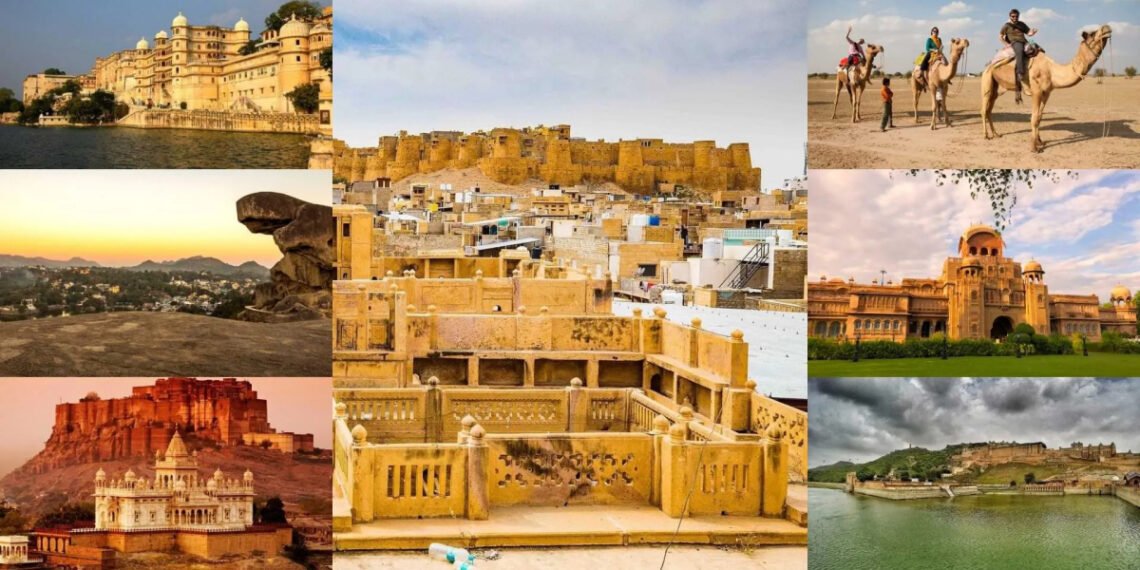
Jaisalmer Fort, known historically as Sonar Qila, represents one of the few functional living forts in the world. Approximately a quarter of the historic settlement’s population resides within its ramparts. Navigating the narrow stone alleys reveals active communities, ornate Jain temples dating from the twelfth to fifteenth centuries, and finely carved facades of traditional merchant havelis such as Patwon Ki Haveli and Salim Singh Ki Haveli.
In the mid-afternoon, transition away from the stone city toward the desert perimeter. The sweeping sand dunes of Sam and the quieter stretches around Khuri offer distinct desert camping experiences. Well-managed tented camps arrange sunset camel excursions across the shifting crests, followed by evening performances of traditional Manganiyar and Langa folk music around a central courtyard fire. Spending the night in a desert camp provides a quiet contrast to the dense historic core of the fortress towns, with clear desert conditions ideal for stargazing.
Days 7 to 8: Lakeside Splendor and Hill Citadels of Udaipur
Departing the arid plains of the Thar, direct your journey south toward the lake region of Udaipur. En route, pause in the Aravalli hills to inspect Kumbhalgarh Fort, home to the second-longest continuous wall system in the world, spanning over thirty-six kilometers.
Upon arriving in Udaipur, the focal point becomes the monumental City Palace along the banks of Lake Pichola. This sprawling complex of interconnected granite and marble palaces houses royal courtyards, detailed tilework, and elevated balconies overlooking the water. A late-afternoon boat transit past Jag Mandir and the Lake Palace provides a calm conclusion to an active historical route. Coordinating this entire multi-city route as a comprehensive Rajasthan holiday tour allows travelers to smoothly connect road transfers, heritage accommodations, desert permits, and localized fort explorations.
Essential Practical Tips for the Circuit
Optimal timing for this itinerary spans from October through March, when daytime temperatures remain moderate and desert evenings are crisp.
Always carry comfortable, supportive walking shoes, as historical citadels feature uneven cobblestones, steep paved inclines, and extensive stone staircases. Retain licensed local guides certified by the Department of Tourism at major fort sites to fully appreciate the complex military strategies, water harvesting engineering, and architectural innovations preserved across these monumental sites.