The blue city of Jodhpur is world-renowned for its towering Mehrangarh Fort and vibrant markets, but the true essence of Rajasthan often lies just beyond the city limits. While the urban center offers a glimpse into royal history, the surrounding countryside provides a window into a lifestyle that has remained harmoniously connected to nature for centuries. For travelers seeking an authentic cultural village experience immersion, exploring the small hamlets and desert communities near the city is an essential part of any itinerary.
These rural areas are not merely tourist spots; they are living ecosystems where traditional crafts, ancient customs, and a profound respect for the environment dictate daily life. Stepping away from the crowded monuments allows visitors to experience the legendary Rajasthani hospitality in its purest form, often characterized by a warm welcome and a cup of traditional masala tea in a mud-walled home.
The Unique Legacy of the Bishnoi Community
The most significant cultural village experience experience near Jodhpur is centered around the villages inhabited by the Bishnoi community. Founded on 29 principles laid down by Guru Jambheshwar in the 15th century, the Bishnoi are often cited as the world’s first environmentalists. Their commitment to the protection of trees and wildlife is not just a philosophy but a way of life that they have defended, sometimes with their lives, over the generations.
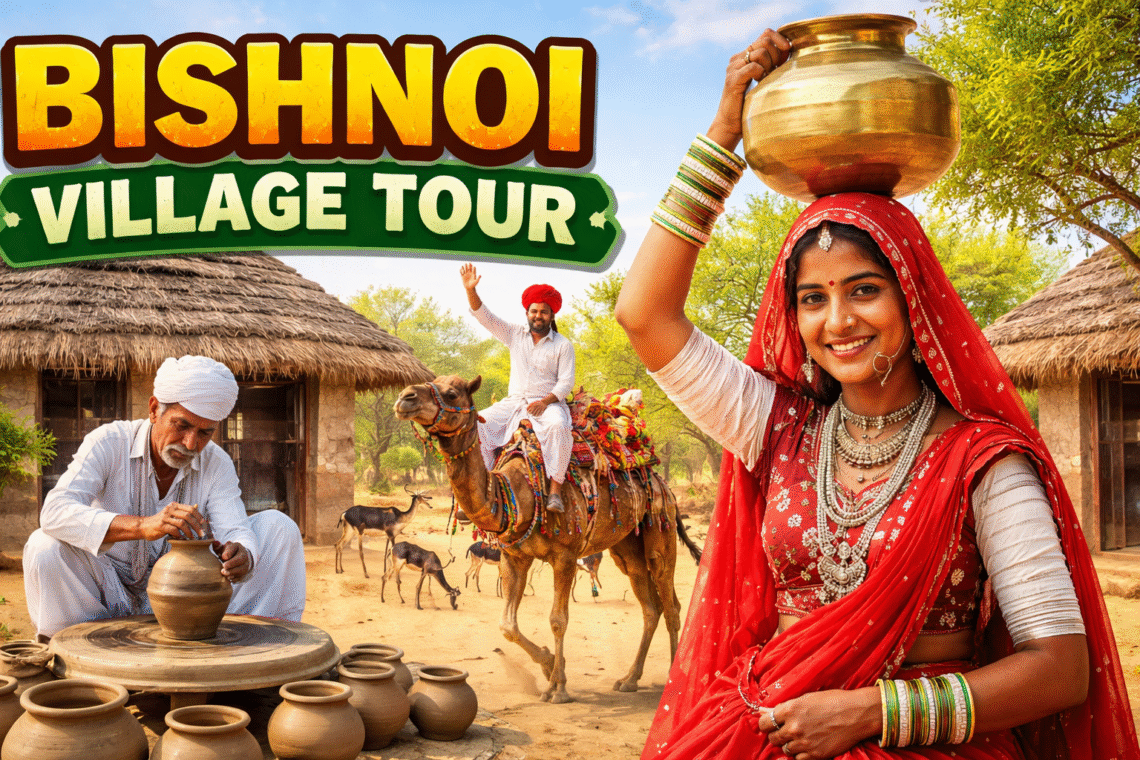
In these cultural village experience, it is common to see Indian Gazelles (Chinkara) and Blackbucks roaming freely near human settlements. The animals sense no threat from the residents, who consider the protection of every living creature a sacred duty. This deep-rooted conservationist spirit creates a serene atmosphere where nature and humanity exist in a rare state of balance. Learning about their history, including the famous Khejarli massacre where community members sacrificed themselves to save trees, offers a humbling perspective on modern environmental challenges.
Traditional Crafts and Artisan Workshops
A journey into the rural outskirts is also a journey into the world of traditional Indian craftsmanship. Many families in the villages surrounding Jodhpur have specialized in specific trades for hundreds of years, passing their skills down through oral tradition and hands-on apprenticeship. Visitors can witness the intricate process of block printing, where hand-carved wooden blocks are used to create complex patterns on cotton fabrics using natural vegetable dyes.
Pottery is another cornerstone of cultural village experience life. Watching a master potter transform a lump of local clay into a functional vessel using a simple manual wheel is a mesmerizing experience. You might also encounter weavers creating durable durries (rugs) featuring geometric patterns that represent the desert landscape. These workshops are not mass-production facilities; they are small, family-run spaces where each piece is crafted with individual care and historical pride.
The Ritual of the Opium Ceremony
One of the more unique and misunderstood cultural village experience practices in the Marwar region is the traditional opium ceremony, known locally as “Amal Sabha.” Historically, this ritual served as a social glue, used to settle disputes, welcome guests, and mark significant life events like weddings or funerals. Today, while strictly regulated, a symbolic version of the ceremony is often shared with visitors as a gesture of brotherhood and peace.
During the ritual, the eldest member of the family filters the concoction through a wooden funnel and offers it to guests from the palm of their hand. It is a moment of quiet reflection and conversation, emphasizing the importance of community and social harmony. Participating in or observing this ceremony provides a deep look into the social hierarchies and hospitality norms that define Rajasthani cultural village experience life.
Planning Your Journey to the Countryside
To truly appreciate these hidden gems, travelers need a reliable way to navigate the desert terrain. While public transport is available, it rarely reaches the smaller, more authentic hamlets where the best experiences are found. Many visitors choose to hire a jodhpur taxi to ensure they have the flexibility to stop at various artisan huts and scenic viewpoints along the way. Having a dedicated vehicle allows for a much more personalized pace, away from the rigid schedules of large tour buses.
The best time to visit is during the cooler months, from October to March, when the desert sun is pleasant and the wildlife is most active. Morning tours are particularly recommended, as they offer the best lighting for photography and the opportunity to see villagers starting their daily routines, from fetching water to tending to their livestock.
Immersive Day Trips and Itineraries
If you are short on time but want a comprehensive overview of the region’s heritage, a specialized bishnoi village tour from jodhpur is the most effective option. These curated excursions typically include visits to Guda Bishnoi Lake, where migratory birds congregate, and stops at various homes to see different crafts in action.
Beyond the wildlife and crafts, these tours allow you to discover bishnoi cultural village experience tour near jodhpur city by interacting directly with the locals. You can see how traditional “Chulha” stoves are used for cooking and how the unique architecture of the round mud houses (Bhunga) keeps the interiors cool during the scorching summer months. This direct interaction is what transforms a simple sightseeing trip into a meaningful cultural village experience exchange.
Culinary Traditions of Rural Rajasthan
No cultural village experience exploration is complete without tasting the local flavors. cultural village experience food in Rajasthan is simple, nutritious, and incredibly flavorful, designed to provide energy for physical labor in a harsh climate. A typical meal might include “Bajre ki Roti” (pearl millet bread) cooked over a wood fire, served with “Ker Sangri”—a unique dish made from dried desert beans and berries—and a side of spicy garlic chutney.
The use of dairy is also prominent, with fresh buttermilk (chaas) and homemade ghee accompanying most meals. Eating these dishes in the courtyard of a cultural village experience home, while sitting on a traditional charpai (woven cot), offers a sensory cultural village experience that no five-star restaurant in the city can replicate. It is a reminder that the best things in life are often the simplest.
Preserving the Spirit of the Desert
As tourism grows in Rajasthan, the importance of sustainable and respectful travel becomes paramount. When visiting these sensitive communities, it is vital to support local artisans by purchasing their crafts directly and to respect their privacy and traditions. The goal of a village visit is not just to observe, but to understand and appreciate a way of life that values conservation over consumption.
By choosing to spend a day in the rural heartland, you contribute to the local economy and help ensure that these ancient traditions continue to thrive. The memories of a quiet afternoon spent watching the sunset over a desert village, accompanied by the sound of distant folk music and the sight of roaming deer, often remain the most cherished part of a Rajasthani adventure.