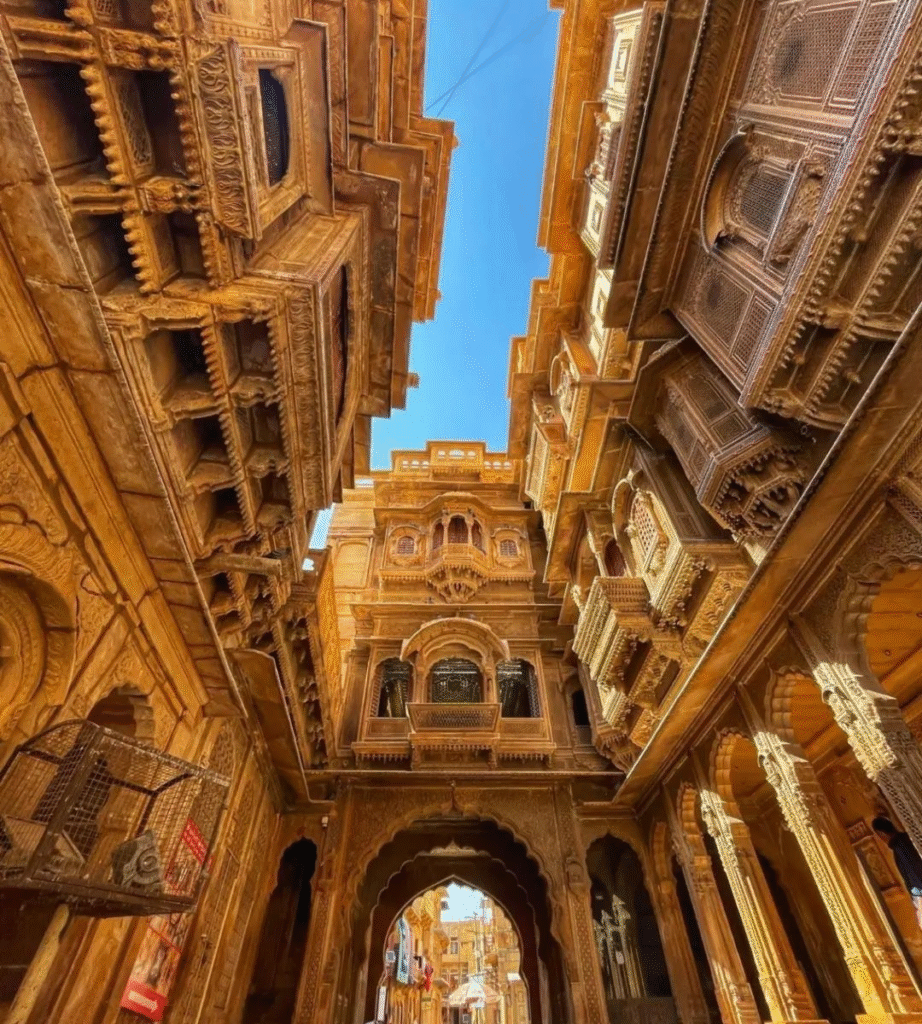
Patwon Ki Haveli is one of those places in Jaisalmer that makes you stop and stare. From the outside it already looks like detailed artwork carved in stone, but once you step in, you understand why it’s considered one of the city’s top heritage spots. If you’re visiting Jaisalmer for the first time, this haveli should be on your list, but it’s worth planning the timing and tickets properly so you don’t waste time in crowds or get confused about fees.
A quick look at the history
Patwon Ki Haveli isn’t a single mansion. It’s a cluster of havelis built by a wealthy merchant family. The complex is often linked to Guman Chand Patwa and his family, who were known for trading and moneylending in the region. Over time, the place became famous for its intricate yellow sandstone work, jharokhas (balconies), detailed carvings, and the kind of craftsmanship that shows how rich Jaisalmer’s merchant era was.
Local tip: Don’t rush through it like a “photo stop.” The real value is in the details: ceilings, door frames, and tiny carvings people usually miss.
Entry fees and extra charges (what to expect)
Most current travel references list the entry fee around:
- Indians: ₹20 per person
- Foreigners: ₹100 per person
- Camera fee: often extra (commonly ₹50)
- Video fee: often extra (commonly ₹100)
Important reality: Fees and timings can vary slightly depending on which part/museum section you enter and any updates at the counter, so treat online numbers as a strong estimate and confirm at the ticket window.
Timings (and why you shouldn’t arrive late)
Many sources list Patwon Ki Haveli as open roughly 9:00 AM to 5:00 PM, though some lists show slightly wider windows depending on the source.
Best practice: Aim to enter by late morning at the latest. If you arrive too close to closing, you’ll end up speed-walking through rooms and missing the experience.
Best time to visit Patwon Ki Haveli
Best hours (for photos + comfort)
- 9:00 AM to 11:00 AM is ideal: softer light, fewer crowds, and a more relaxed walk-through.
Best season
- October to March is the most comfortable season in Jaisalmer for walking-heavy sightseeing like havelis and fort lanes. (In summer, the heat makes it tiring fast.)
Local tip: If you’re visiting in peak winter, go on a weekday morning. Weekends get packed.
How much time to keep for the visit
Plan 60–90 minutes if you want to explore at a decent pace and actually observe the details.
If you’re a photography lover or into architecture, you can easily spend longer.
What to see inside (so you don’t miss the good parts)
- Carved façades and jharokhas: the signature look of the haveli
- Courtyards and corridors: great for light-and-shadow photos
- Fine detailing: ceilings, pillars, door frames, and small motifs
Local tip: Look up. People only look at walls and miss the ceiling work.
Practical local tips (small things that save hassle)
- Wear comfy shoes: lanes and steps are not “nice shoes” friendly.
- Keep cash for tickets/camera fees: sometimes counters are easier with cash.
- Ignore pushy “guides”: if you want a guide, choose one officially and fix the price upfront.
- Go lightly packed: tight lanes + crowds + bags = irritation.
Make it a full Jaisalmer day (what to do after)
After your haveli visit, you’re perfectly placed to continue exploring the city and then end the day with the desert. If you’re planning a desert night, you can explore Best Desert Camps Jaisalmer for a complete camp stay experience. If comfort is your priority (especially in winter), a premium Tent In Jaisalmer can make the night much easier. And if you want one unforgettable add-on, Dinner on Dunes is the kind of experience that turns a normal trip into a “this was special” trip.