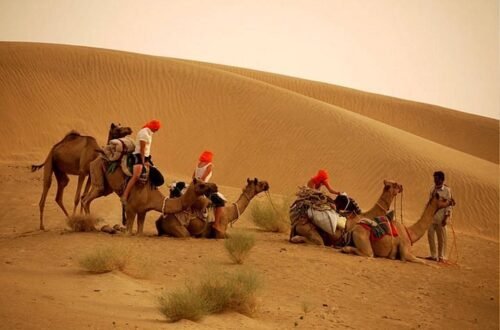
Stepping into Jaipur is like walking through a living museum where every sandstone block tells a story of royal ambition and mathematical precision. Known globally as the Pink City, the capital of Rajasthan is a masterclass in Vedic architecture and Rajput bravery. For travelers arriving from the Blue City, securing a reliable taxi in jodhpur ensures a smooth transition between these two historic hubs, allowing you to witness the changing landscapes of the Thar Desert before being greeted by the terracotta-hued walls of Jaipur. The city’s layout, designed by Vidyadhar Bhattacharya under the patronage of Maharaja Sawai Jai Singh II, remains one of the earliest examples of planned urban living in India, adhering to the principles of Vastu Shastra.
The Scientific Soul of Jaipur’s Design
Unlike other medieval cities that grew organically through winding alleys, Jaipur was conceived on a grid system. The city is divided into nine blocks, reflecting the nine planets of the ancient Hindu zodiac. This level of foresight is most evident at the Jantar Mantar, a UNESCO World Heritage site. This astronomical observatory houses the world’s largest stone sundial, the Samrat Yantra. Walking through this complex feels like navigating a giant geometric puzzle. To truly appreciate the scale of these instruments, many visitors opt for a Jaipur sightseeing taxi to navigate between the city’s vast heritage sites without the stress of local traffic. The precision of these instruments, which can measure time to within two seconds, stands as a testament to the scientific expertise of the 18th-century Rajputana era.
A Symphony of Stone and Symmetry
The architectural language of Jaipur is a sophisticated blend of Hindu Rajput and Mughal styles. This “Indo-Saracenic” fusion is best represented by the Hawa Mahal, or the Palace of Winds. Its iconic five-story exterior resembles a honeycomb, featuring 953 small windows known as jharokhas. These were designed not just for aesthetics, but to allow royal ladies to observe daily life on the street below without being seen themselves. The cooling effect created by the Venturi effect through these windows is a primitive yet brilliant form of air conditioning. When traveling with large families or photography groups, a jodhpur tempo traveller provides the necessary space to carry equipment and groups comfortably from the heart of the old city to the towering heights of the surrounding forts.
Fortified Grandeur: Amer, Nahargarh, and Jaigarh
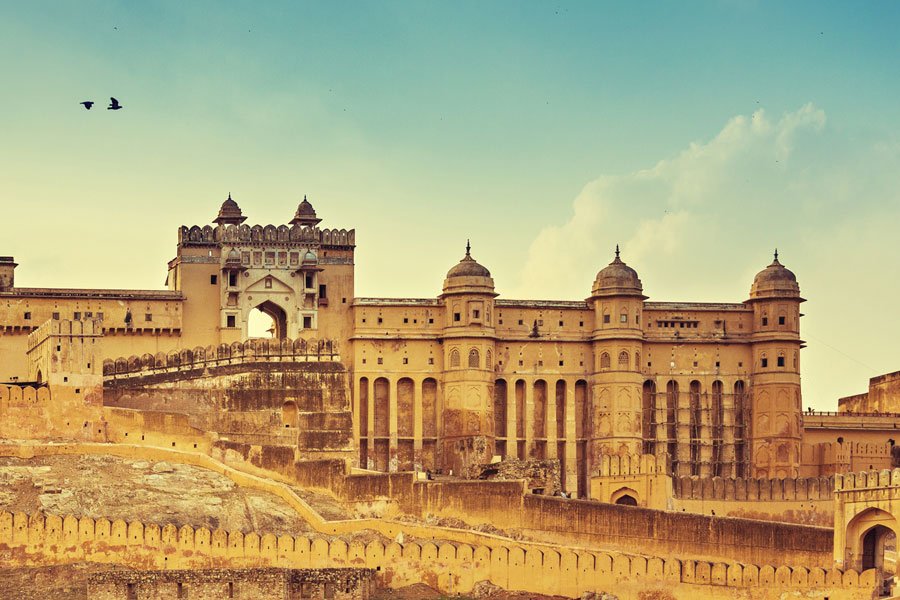
The heritage of the Pink Capital extends beyond its city gates to the rugged Aravalli Hills. Amer Fort, with its formidable walls and delicate interiors like the Sheesh Mahal (Mirror Palace), showcases the dual nature of Rajasthan’s history: rugged defense and refined luxury. The Sheesh Mahal is particularly striking; a single candle flame can illuminate the entire hall through thousands of tiny mirrors. Nearby, Jaigarh Fort houses the Jaivana Cannon, once the largest wheeled cannon in the world, while Nahargarh Fort offers a panoramic view of the city’s expanding skyline. These sites require significant uphill travel, making a dedicated vehicle essential for a comprehensive tour.
The Living Traditions of the Walled City
The heritage of Jaipur isn’t just found in its stone structures but in its thriving artisanal culture. The Pink City was established as a commercial hub, and its “bazaars” like Johari Bazaar and Bapu Bazaar are still organized according to the original 1727 plan. Here, the architecture of the shops—uniform in height and color—creates a visual harmony rarely seen in modern urban environments. Artisans still practice block printing, blue pottery, and gemstone cutting using techniques passed down through generations. This continuity of human experience is what gives the “Pink Capital” its soul. It is a city where the past isn’t just remembered; it is lived in every day. From the royal cenotaphs at Gaitore to the tranquil waters of Jal Mahal, the architectural footprint of Jaipur remains a benchmark for beauty and structural integrity in the modern world.