The Thar Desert transforms into one of the most hospitable and visually stunning terrains in India as the scorching heat recedes. For travelers planning a desert retreat, the months from October through March represent the prime season to encounter the shifting sands of the Great Indian Desert. The golden crests of the Sam Sand Dunes reveal their finest contours under clear skies, offering comfortable daytime temperatures and crisp, cold desert nights. Planning your itinerary around these cooler months unlocks the quintessential desert safari experience without the physical strain of desert heat.
The Ideal Desert Climate: October to March
Summer in western Rajasthan brings extreme daytime temperatures that can easily cross 45°C, making sand dune exploration physically demanding and often impractical. In contrast, the winter season brings daytime temperatures averaging between 20°C and 25°C, paired with a mild, dry breeze that keeps the sand stable and comfortable for exploration. At night, temperatures drop to around 7°C to 10°C, creating the classic desert chill that makes evening campfires and open-air cultural performances an enduring highlight of desert travel. The absence of heavy humidity and rain ensures unobstructed views across vast stretches of dunes, making early mornings and late afternoons prime times for photography and dune walking.
Unfiltered Golden Hour Views
The low angle of the winter sun creates elongated shadows and highlights the undulating wave patterns carved into the dunes by the wind. During the winter solstice window, sunsets and sunrises in the desert develop rich gradients of amber, gold, and crimson that reflect directly off the fine sand particles. Because the atmosphere remains clean and free of summer dust storms, visibility stretches across miles of the horizon. Photographers, birdwatchers, and nature enthusiasts find winter mornings exceptionally rewarding, as migratory desert birds such as the Houbara bustard and various species of eagles occasionally appear in the surrounding scrubland.
Immersive Cultural Evenings
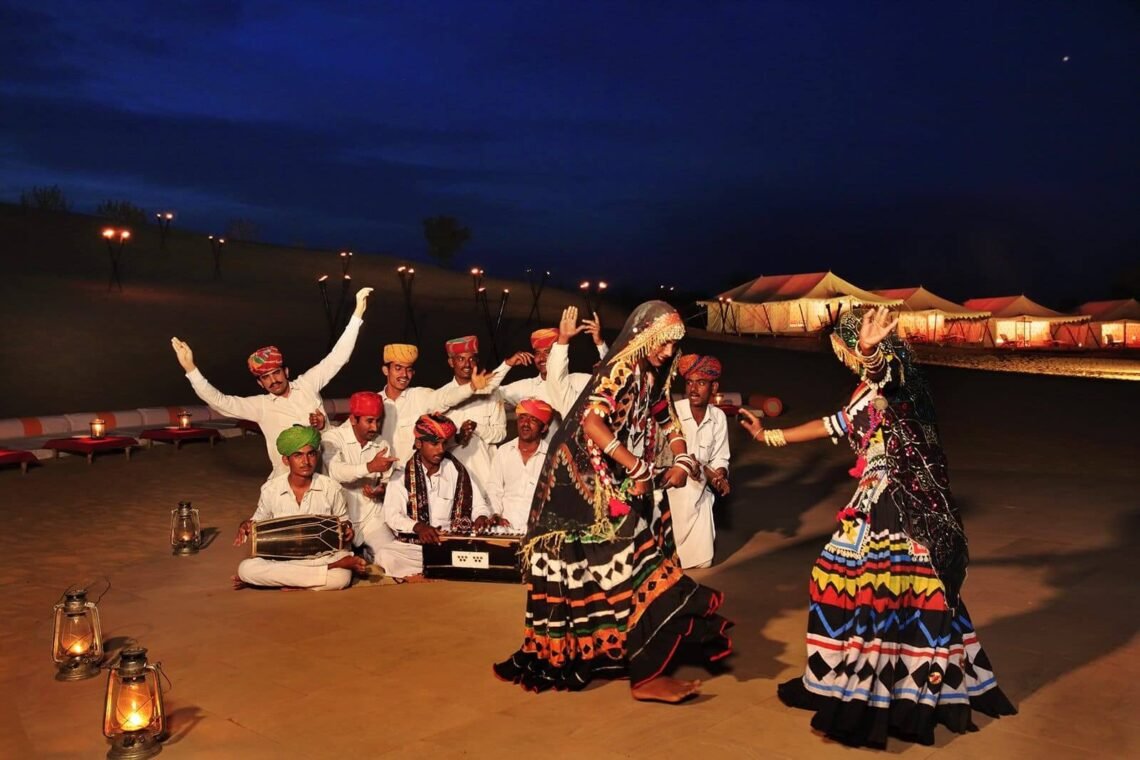
Winter evenings in the desert center on community gatherings under the open sky. As twilight settles over the Thar, traditional performers assemble to showcase the region’s heritage. Manganiyar and Langa musicians perform folk ballads celebrating historical desert lore, accompanied by the distinct sounds of the kamaicha, dholak, and harmonium. Alongside musical performances, Kalbelia dancers showcase intricate footwork around a crackling bonfire. These performances provide authentic insight into Rajasthan’s living folklore, paired with regional dining options like dal baati churma, ker sangri, and freshly baked millet breads served hot off traditional clay griddles.
Desert Thrills on the Sam Dunes
Active exploration across the sand shifts into full gear during winter. Traversing the dunes in modified four-wheel-drive vehicles allows travelers to climb sheer sand crests and experience controlled descents across steep inclines. For those who prefer a traditional pace, camel treks navigate through quieter stretches of the desert where motorized vehicles cannot go. The winter conditions make long treks through the sands pleasant rather than taxing. Visitors seeking high-energy experiences can choose from a range of adventure activities in Jaisalmer including quad biking, sandboarding, and guided off-road excursions across designated dune sectors.
Luxury Living on the Golden Sands
Desert hospitality combines heritage architecture with modern comfort. Staying right on the edge of the desert allows guests to experience both dramatic dune vistas and peaceful night skies away from city illumination. Guests looking for comfortable, climate-insulated desert accommodation often opt for swiss tents in jaisalmer which feature attached tiled bathrooms, hot running water, traditional block-print decor, and comfortable bedding suited for cool winter nights. Magra Desert Camp incorporates these amenities while maintaining an authentic desert ambiance, blending Rajasthani hospitality with thoughtful structural design to ensure warmth during winter lows.
Stargazing Under Pure Desert Skies
One of the most profound aspects of a winter stay in the Thar Desert is the clarity of the night sky. With virtually no light pollution and low winter atmospheric moisture, the desert sky acts as a natural planetarium. Constellations, the Milky Way core, planetary alignments, and seasonal meteor showers appear sharp and vivid to the naked eye. Sitting around a glowing hearth while observing the celestial canopy provides a serene, grounding contrast to daytime adventures.
Planning Your Seasonal Desert Journey
Securing accommodations and permits early is essential when traveling between November and February, as winter coincides with peak desert tourism across Rajasthan. Reserving a reputable camp in Jaisalmer well in advance ensures direct access to guided safari slots, authentic folk programming, and well-maintained living quarters. Packing warm woolen layers, windbreakers, sun protection, and comfortable walking shoes will keep you prepared for the marked difference between daytime warmth and brisk desert nights, guaranteeing a comfortable and memorable journey into the Thar Desert.