Nestled against the rugged granite boulders of the ancient Aravalli Range, the Jawai region presents an authentic portrait of traditional pastoral existence. Far from the bustling tourist circuits of Jaipur and Udaipur, this landscape preserves an unhurried, grounded rhythm of daily life. At dawn, the quiet wilderness stirs not with mechanical noise, but with the clinking of brass bells and the rhythmic thud of wooden churning rods. For mindful travelers, engaging with local life here provides genuine insight into how cultural traditions, spiritual reverence, and nature thrive in deliberate harmony.
A stay at a boutique resort in Jawai offers a gateway to these intimate local interactions. Rather than merely observing the landscape from afar, visitors gain the privilege of meeting the communities that have stewarded this terrain for centuries. These cultural encounters foster reciprocal respect and a deeper understanding of Rajasthan’s enduring rural identity.
Guardians of the Wilderness: The Rabari Community
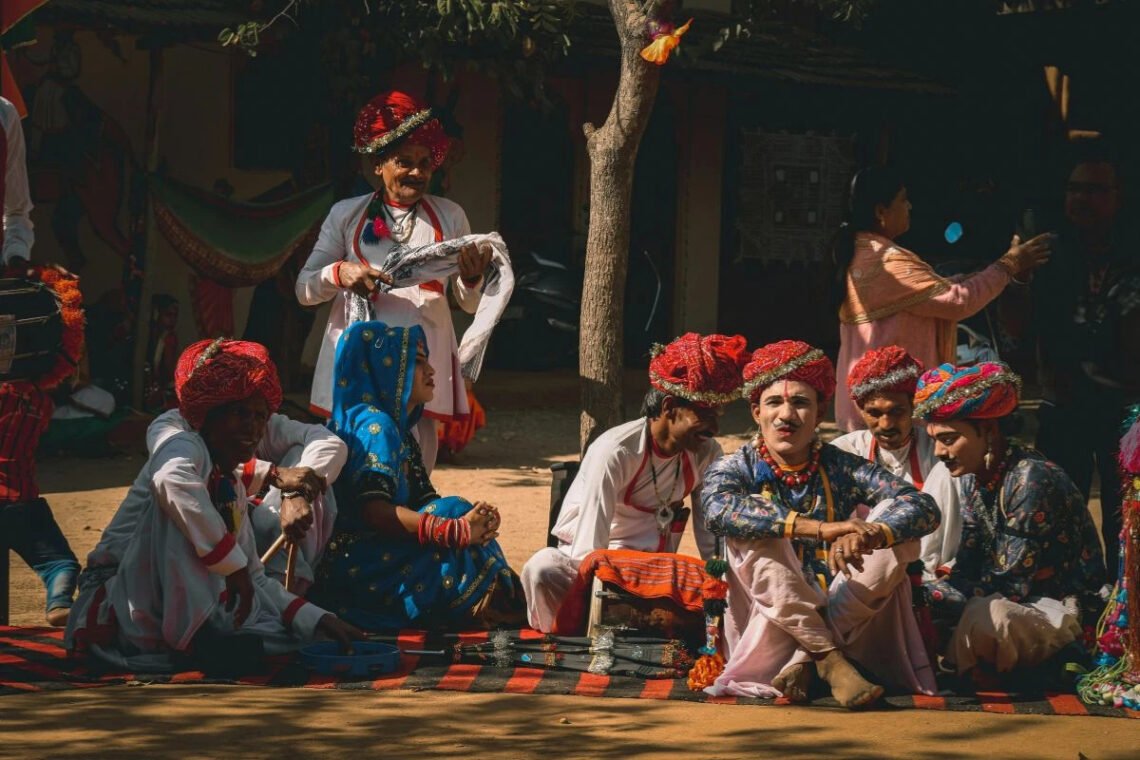
The cultural soul of Jawai resides within its indigenous semi-nomadic pastoralists, predominantly the Rabari people. Instantly identifiable by their pristine white dhotis, ornate turbans in shades of scarlet and vermilion, and intricately crafted silver jewelry, the Rabari community embodies an extraordinary pastoral legacy. Traditionally believed to have been placed on Earth by Goddess Parvati to care for camels, they have expanded their pastoral craft over generations to include herds of goats and sheep.
Walking through a Rabari dhani (hamlet) reveals a community deeply rooted in ancestral customs:
- Traditional Attire: Men wear voluminous turbans, hand-spun dhotis, and embroidered jackets called angrakhis, accented with hollow gold earrings (murki). Rabari women wear vibrant backless blouses (kanchali), pleated skirts, and dark woolen veils embroidered with intricate mirror work, alongside heavy brass and silver armlets.
- Living Architecture: Homes are constructed using local stone, clay, and timber, with cow dung plaster serving as an insulating agent against desert heat and winter chill. Courtyards feature hand-painted geometric patterns (mandana) that invite prosperity and bless visitors.
- Spiritual Lineage: Faith is intimately woven into every daily act. Shrines dedicated to folk deities like Baba Ramdev and Pabuji dot the hillsides, serving as cultural focal points where oral histories and epic folk ballads are recited across generations.
An Inimitable Truce: Pastoralists and Predators
What elevates the village culture of Jawai to global ecological significance is its relationship with apex predators. In most pastoral regions worldwide, the coexistence of livestock owners and large carnivores is fraught with lethal conflict. In Jawai, however, centuries of cohabitation have birthed a profound, non-violent accommodation between humans and wild leopards.
During a guided Jawai leopard safari, naturalists frequently point out caves situated just a short stroll from human settlements. The Rabari people regard the leopards as sacred guardians under the protection of Ambika Mata and regional village deities. When a predator occasionally takes an animal from a domestic flock, the community does not pursue retaliation. Instead, herders accept the loss as an inevitable offering to the land’s original inhabitants. This spiritual tolerance, combined with mutual spatial awareness, has preserved a flourishing wildlife sanctuary without barricades or fences.
Daily Rituals, Artisan Craft, and Gastronomy
Stepping into a village home offers direct encounters with authentic Rajasthani hospitality. Visitors are welcomed with warmth, often signaled by the preparation of fresh chaas (spiced buttermilk) or sweet, cardamom-infused masala chai brewed directly over open-fire clay hearths (chulhas).
The culinary culture of village life is an ode to arid adaptation:
- Clay-Oven Delicacies: Thick millet flatbreads (bajra roti) are served with generous dollops of freshly churned white butter (safed makhan).
- Foraged Ingredients: Traditional dishes celebrate hardy desert crops, featuring sun-dried berries and pods such as ker sangri, roasted garlic chutneys (lahsun chhibri), and regional curries cooked with whole spices.
- Slow Cooking Techniques: Earthen vessels impart subtle mineral undertones to lentils and vegetable stews, allowing flavors to develop gradually over slow burning embers.
Beyond culinary craft, village lanes showcase utilitarian folk arts. Local potters spin ancestral clay wheels with rhythmic precision, shaping storage pots (matkas) designed to cool drinking water naturally. Women work meticulously on durries (hand-woven cotton rugs) and appliqué work, turning everyday textiles into storytelling canvases that reflect their local flora and fauna.
Ethical Immersion and Community Stewardship
Experiencing village life requires sensitivity and discretion. Responsible tourism initiatives led by local guides ensure that village walks remain non-intrusive, educational, and economically supportive of the residents. Travelers are encouraged to respect local privacy, seek permission prior to capturing portraits, and support local cottage artisans directly without middleman disruption.
By witnessing the quiet dignity of the Rabari herdsmen, sharing a meal prepared from ancestral recipes, and observing the ancient truce between humans and leopards, visitors experience Rajasthan not as a museum exhibit, but as a vibrant, living ecosystem built on mutual tolerance, faith, and resilient community bonds.