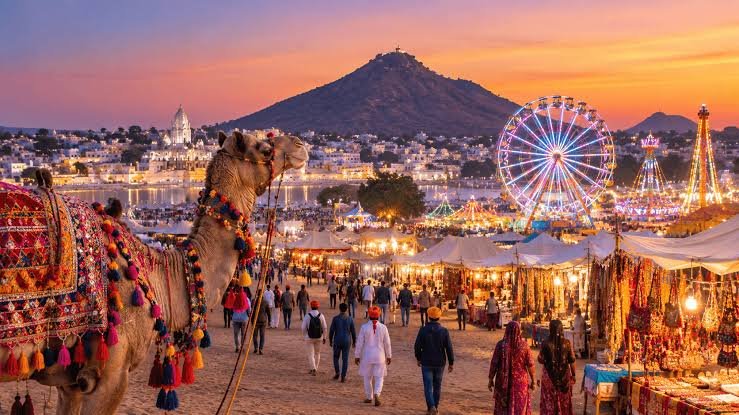
Every November, the quiet temple town of Pushkar transforms into a swirling sea of marigold garlands, brass camel bells, and desert dust. Located just 14 kilometers from Ajmer across the Nag Pahar hills in Rajasthan, this annual gathering—known locally as Kartik Mela—brings together tens of thousands of livestock herders, Hindu pilgrims, and international travelers. In 2026, the festivities run from November 17 to November 24, culminating on the sacred full moon night of Kartik Purnima. Having guided travelers through the narrow lanes and sandy fairgrounds of Ajmer district for years, the team at Rajasthan Yatra has put together this ground-level manual to help you navigate the fair with clarity and cultural respect.
Understanding the Dual Soul of Pushkar Mela
To truly appreciate Pushkar, you have to understand that two distinct worlds operate side by side during the eight-day festival. On the sandy outskirts of town, the Mela Ground hosts one of Asia’s largest traditional camel, horse, and cattle markets. Pastoralists from Marwar and Mewar arrive days early to trade livestock over morning cups of cardamom chai. Meanwhile, at the center of town, the spiritual heart beats around Pushkar Sarovar. Devotees travel from across India to bathe in the holy waters and offer prayers at the rare 14th-century Brahma Temple.
Top Tours and Curated Experiences
Navigating a town whose population multiplies overnight requires careful logistical planning, particularly when securing heritage stays or desert camp transfers. Working with an experienced tour operator in Rajasthan ensures that your transport, local guide permissions, and early-morning ground access are arranged well before the crowds peak.
- Sunrise Hot Air Balloon Rides: Launching around 6:30 AM from the desert perimeter, hot air balloons drift directly over the tented camps, dune ridges, and temple spires as the morning mist lifts off the lake.
- Golden Hour Camel Safaris: Rather than taking short rides inside the noisy fairground, opt for an ethical 60-to-90-minute sunset trek into the surrounding Aravalli foothills and quiet sand dunes.
- Heritage and Royal Circuit Extensions: Many travelers pair Pushkar with nearby Ajmer’s Dargah Sharif, Jaipur, or Jodhpur. If you prefer private heritage palaces and chauffeur-driven comfort, exploring luxury Rajasthan tour packages allows you to retreat to peaceful boutique resorts just outside the town center after busy festival mornings.
- Multi-City Cultural Routes: For first-time visitors wanting to see forts alongside rural festivals, a well-paced majestic Rajasthan getaway tour seamlessly connects Pushkar’s spiritual energy with the royal architecture of Udaipur and Jodhpur.
Sacred Ghats and Temple Etiquette
Pushkar Lake is ringed by 52 stone ghats, each carrying specific historical and religious significance. Varaha Ghat, Brahma Ghat, and Gau Ghat draw the heaviest footfall, especially during the evening Maha Aarti when hundreds of leaf lamps are floated onto the dark water.
- Footwear and Dress Code: Always remove your shoes well before stepping onto the marble steps of any ghat or temple courtyard. Dress modestly with shoulders and knees covered.
- Photography Boundaries: Never photograph pilgrims while they are bathing or performing private rituals at the water’s edge. Inside the Brahma Temple, mobile phones and cameras must be deposited in lockers outside.
- Navigating Ghat Priests: You will likely be approached by local priests offering to conduct a Pushkar Puja. If you wish to participate, clearly agree on the exact donation amount before the ceremony starts; otherwise, a polite decline with folded hands is completely respected.
- Dietary Rules: Pushkar is a strictly vegetarian and alcohol-free holy town. Embrace the local food scene by trying hot malpuas, dal baati churma, and fresh rose-infused lassi.
Must-See Events and Festival Timeline
The festival follows a natural rhythm across the week, shifting from commercial livestock trading in the opening days to folk competitions and intense pilgrimage rituals toward the end.
- Days 1 to 3 (Livestock Trading): Arrive at the dunes by 7:00 AM to watch herders groom their animals and negotiate sales. The light is soft, the air is crisp, and the trading is entirely authentic.
- Days 4 to 6 (Folk Competitions): Afternoons at the stadium ground feature lively contests including camel decoration judging, camel races, turban-tying challenges, matka phod pot-breaking, and the famous longest moustache competition. Evenings showcase Kalbelia dancers and Manganiyar folk musicians.
- Days 7 to 8 (Kartik Purnima): The focus shifts entirely to the lake. Thousands of devotees take their sacred dip at dawn on the full moon day, accompanied by continuous temple bells and Deepdaan lamp offerings.
Practical Field Tips for Travelers
November desert weather swings sharply between chilly dawns and warm afternoons, so pack breathable cotton layers alongside a warm fleece or shawl for early mornings. Carry a light scarf to shield against fine sand at the stadium, keep small rupee notes handy for bazaar purchases, and always ask permission before photographing herders or their decorated camels. When approached with patience and cultural sensitivity, Pushkar Fair offers an unforgettable window into living Rajasthani heritage.