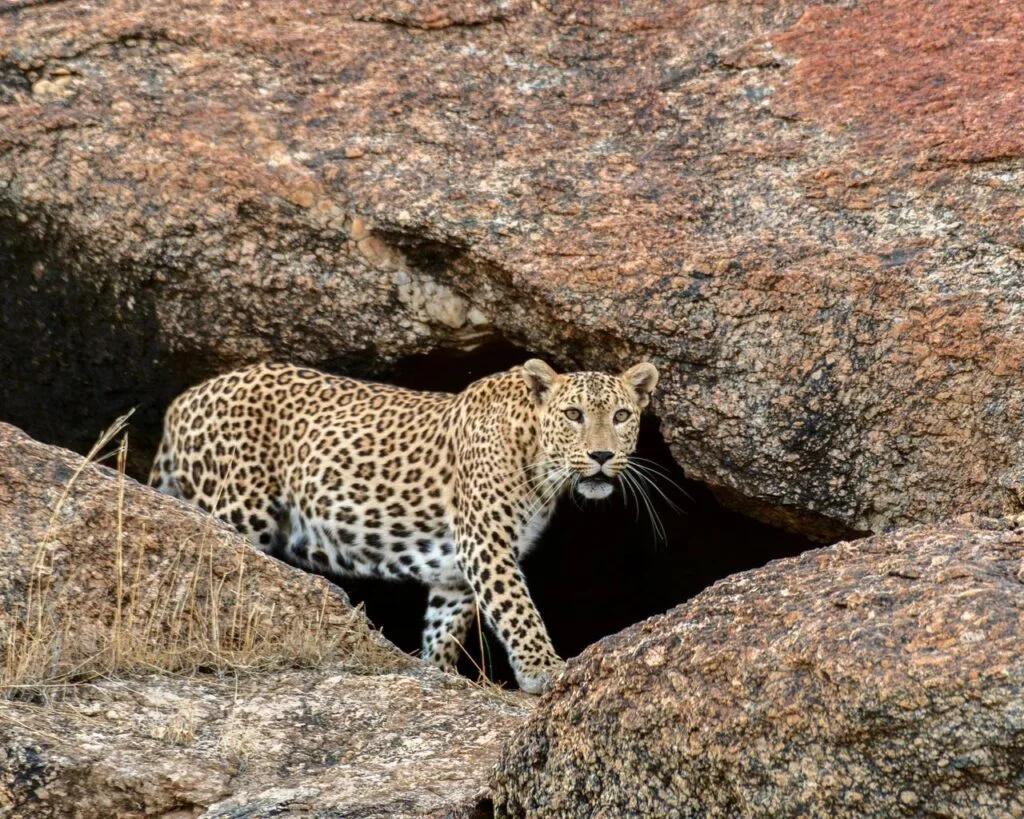
Nestled in the Pali district of southern Rajasthan, the Jawai region offers a distinct wilderness experience that departs entirely from traditional fenced national parks. Dominated by million-year-old granite hills, cave-dotted outcrops, and the expansive backwaters of the Jawai Dam, this terrain serves as a thriving, free-roaming habitat for one of India’s highest concentrations of Indian leopards. Embarking on a Jawai Leopard Safari allows travelers to traverse these rugged boulders in open-top vehicles alongside seasoned local trackers who understand the subtle movement patterns of the resident wildlife. Rather than following rigid forest gates and crowded trails, game drives here move organically across rocky ridges, scrublands, and quiet riverbeds where wild predators bask in the golden morning light.
Remarkable Wildlife Encounters Beyond the Granite Rocks
While the elusive leopard remains the undeniable highlight of every expedition, the biodiversity surrounding the Jawai Bandh ecosystem rewards patient observers with diverse sightings throughout the day. The region supports a complex food web sustained by seasonal water channels and rocky sanctuaries. During morning and evening excursions, naturalists frequently guide guests toward thriving populations of native fauna.
- Marsh Crocodiles: Along the tranquil banks and rocky islands of the Jawai Dam, dozens of mugger crocodiles can be observed sunbathing in close proximity to wading waterbirds.
- Migratory and Resident Avifauna: Between October and March, the reservoir transforms into an ornithological haven attracting greater flamingos, demoiselle cranes, bar-headed geese, sarus cranes, Indian eagle-owls, and pied kingfishers.
- Nocturnal and Grassland Mammals: As dusk settles over the hills, striped hyenas, Indian wolves, jungle cats, sloth bears, nilgai, and Indian crested porcupines emerge across the scrub forest.
The Sacred Bond Between the Rabari Community and Leopards
What elevates Jawai into a globally recognized model of wildlife conservation is the centuries-old harmony shared between the local human population and apex predators. The semi-nomadic Rabari pastoralists, instantly recognizable by their striking crimson turbans and traditional white attire, have grazed their cattle, sheep, and goats across these valleys for generations. Rooted in deep spiritual reverence for Lord Shiva and local hill deities, the Rabari people view the leopards not as threats, but as sacred guardians of the rocky shrines perched atop the granite formations. Remarkably, there have been zero recorded instances of unprovoked leopard attacks on humans in this region for over a century. When a predator occasionally claims livestock, local herders accept the loss with quiet grace rather than retaliation, preserving an unbroken cycle of mutual respect.
Practical Insights for Planning Your Jawai Wilderness Expedition
Drawing from years of on-ground field hospitality near Village Sena and the Jawai Dam backwaters, planning an enriching trip requires aligning your itinerary with seasonal rhythms and local etiquette.
- Optimal Travel Window: Visiting between October and March provides crisp morning temperatures ideal for extended tracking drives and peak migratory bird activity along the reservoir. Summer months also deliver frequent predator sightings near shrinking waterholes, though afternoon heat requires midday rest.
- Recommended Duration: Allocating at least two nights and three days ensures enough time for multiple sunrise and sunset drives, a guided Rabari village walk, and unhurried birdwatching sessions without rushing between locations.
- Field Etiquette and Preparation: Wearing muted, earthy tones helps visitors blend into the rocky environment, while maintaining silence near granite caves ensures leopards remain undisturbed in their natural dens. Always seek permission from village elders before photographing Rabari families during cultural walks.
Authentic Hospitality Amidst the Wilderness at The Jawai Sagar
Choosing where to stay plays a vital role in connecting deeply with the rhythm of the landscape. Positioned near the serene backwaters of the Jawai Dam in Village Sena, The Jawai Sagar blends contemporary comfort with the raw beauty of rural Rajasthan. Recognized by discerning wildlife travelers as the best resort in Jawai, the property features spacious Jungle View and Paradise View accommodations crafted to frame panoramic vistas of the surrounding granite hills and lake waters. Guests return from thrilling morning drives to enjoy farm-fresh Rajasthani culinary specialties, quiet garden spaces, and evenings spent beneath clear desert skies. By working directly with indigenous trackers, local artisans, and community stewards, The Jawai Sagar ensures every journey supports sustainable conservation while offering an authentic, deeply memorable window into Rajasthan’s untamed heritage.