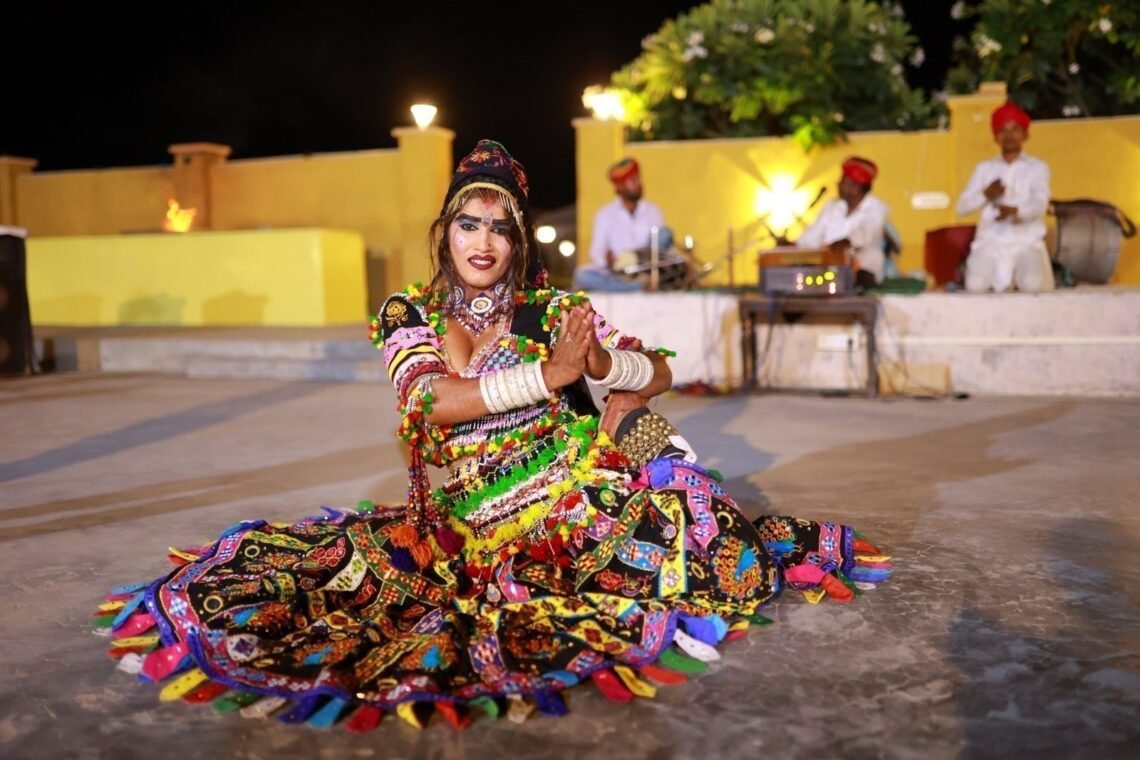
The golden sands of the Thar Desert come alive after sunset with the rhythmic beats of the dholak, the soulful resonance of the kamayacha, and the vibrant twirls of traditional performers. For travelers exploring Rajasthan, witnessing live folk performances under a starlit desert sky is an essential cultural immersion that connects visitors with centuries of Marwari and Rajput heritage. At Magra Desert Camp, guests gather around warm bonfires each evening to experience authentic performances curated in collaboration with local Manganiyar and Langa folk artist communities, preserving traditional music and dance forms passed down through generations.
Why Traditional Folk Performances Matter in Desert Culture
In the arid expanses of western Rajasthan, music and dance historically served as vital forms of storytelling, celebration, and community bonding. Nomad communities, royal court musicians, and pastoral tribes developed distinct movement styles and musical instruments adapted to desert life. When staying at a desert camp in Jaisalmer, evenings become an open-air stage where visitors do not merely watch a show—they participate in living history. Local performers use handcrafted instruments such as the khartal (wooden clappers), algoza (double flute), and ravanhatha, creating an acoustic atmosphere that modern amplification cannot replicate.
Iconic Rajasthani Folk Dances You Will Witness
Kalbeliya: The Serpentine Dance of the Thar
Recognized by UNESCO as an Intangible Cultural Heritage of Humanity, the Kalbeliya dance is performed by women of the Kalbeliya snake-charmer community. Dressed in flowing black ghagras embroidered with silver threads and mirror work, dancers mimic the fluid, undulating movements of a serpent. Accompanied by male musicians playing the poongi (a traditional wind instrument) and duff, the tempo gradually accelerates until the dancers spin at breathtaking speeds while maintaining remarkable balance and grace.
Ghoomar: The Royal Dance of Grace
Originating from the Bhil tribe and later adopted by Rajput royalty, Ghoomar is synonymous with Rajasthani elegance. Performers wear colorful, heavily pleated ghagras and semi-transparent odhnis that veil their faces as they execute synchronized circular spins. The choreography relies on subtle footwork, rhythmic hand gestures, and collective harmony rather than acrobatic leaps, making it a mesmerizing centerpiece of evening gatherings.
Bhavai: Balancing Mastery and Precision
Bhavai is one of the most technically demanding folk dances in western India. Female dancers balance stacks of seven to nine brass or earthen pots on their heads while swaying, twirling, and executing intricate footwork. To heighten the spectacle, seasoned performers often dance barefoot on the edges of brass plates, broken glass, or naked swords. This art form requires years of rigorous physical conditioning and spatial awareness, reflecting the everyday resilience of desert women who historically carried water across long distances.
Chari Dance: Celebration with Fire
Hailing from the Gujjar community of Kishangarh and practiced widely across desert festivities, the Chari dance symbolizes joy and hospitality. Dancers balance brass pots (charis) on their heads containing cotton seeds dipped in oil, which are lit ablaze during the performance. As the dancers move through darkened courtyards and sand dunes, the flickering flames trace glowing arcs against the night sky.
Terah Taali: Rhythm in Motion
Performed primarily by women of the Kamada tribe in honor of folk deity Baba Ramdev, Terah Taali is a devotional dance featuring thirteen manjeeras (small brass cymbals) tied to various parts of the body, including the wrists, elbows, waist, and ankles. Seated on the ground, the performer strikes these cymbals in complex rhythmic patterns using a pair held in her hands, occasionally holding a small sword between her teeth or balancing a pot on her head to demonstrate unwavering concentration.
Experiencing Authentic Hospitality and Comfort in the Dunes
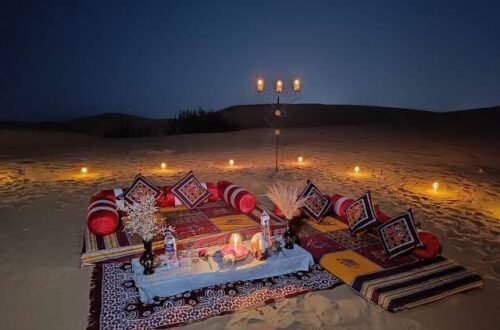
Enjoying an evening of cultural dance in Jaisalmer becomes even more memorable when paired with genuine desert hospitality. After hours of camel safaris across the Sam Sand Dunes and live folk performances, travelers can unwind in a well-appointed Swiss tent in Jaisalmer that blends traditional Rajasthani aesthetics with modern amenities such as attached washrooms, comfortable bedding, and private sit-out areas.
Tips for Travelers Attending a Desert Folk Evening
- Arrive before sunset: Reaching the dunes early allows you to experience the changing colors of the desert horizon before the evening musical program begins.
- Engage respectfully with artists: Folk musicians and dancers take immense pride in their ancestral craft; appreciating their live acoustics without loud interruptions enhances the experience for everyone.
- Dress for desert temperatures: While afternoons in Jaisalmer remain warm, desert nights drop significantly in temperature between October and March, so carrying a light shawl or jacket is advisable.
- Sample traditional cuisine: Many desert evenings conclude with an authentic Rajasthani thali featuring dal baati churma, ker sangri, and bajra roti prepared using local spices.
Preserving Living Heritage in Jaisalmer
Supporting authentic cultural evenings directly sustains rural artist families who rely on tourism to keep their ancestral music and choreography alive. By choosing experiences that prioritize genuine local talent, traditional instrumentation, and respectful cultural exchange, visitors help ensure that the vibrant rhythms of Jaisalmer continue echoing across the Thar Desert for generations to come.