While the “Blue City” of Jodhpur is famous for its towering Mehrangarh Fort and bustling markets, the true soul of Rajasthan often lies just beyond the city limits. Moving away from the urban noise allows travelers to experience a lifestyle that has remained largely unchanged for centuries. A cultural escape to the traditional villages surrounding Jodhpur offers a rare glimpse into the harmonious relationship between humanity and nature.
To truly immerse yourself in these landscapes without the stress of navigating rural roads, hiring a reliable taxi in jodhpur is the most efficient way to travel. Having a dedicated vehicle ensures you can explore at your own pace, stopping to photograph wild blackbucks or chat with local artisans whenever the moment strikes.
The Timeless Appeal of Rural Rajasthan
Stepping into the villages outside Jodhpur is like walking into a living museum. Unlike the tourist-heavy centers, these hamlets prioritize community, conservation, and ancient craftsmanship. The architecture here is functional and beautiful, featuring mud-walled houses known as jhampas that are naturally cooled against the desert heat.
The beauty of a rural escape lies in its simplicity. Here, the day is governed by the sun, and the hospitality is legendary. Visitors are often greeted with traditional ceremonies and offered local delicacies that you simply cannot find in city restaurants. This transition from the majestic palaces of the city to the humble dwellings of the desert provides a balanced perspective on the rich heritage of the Marwar region.
The Bishnoi Community: Guardians of the Desert
One cannot discuss the outskirts of Jodhpur without mentioning the Bishnoi people. Known as the world’s first environmentalists, the Bishnoi follow 29 principles laid down by their founder, Guru Jambheshwar, which mandate the protection of all living beings.
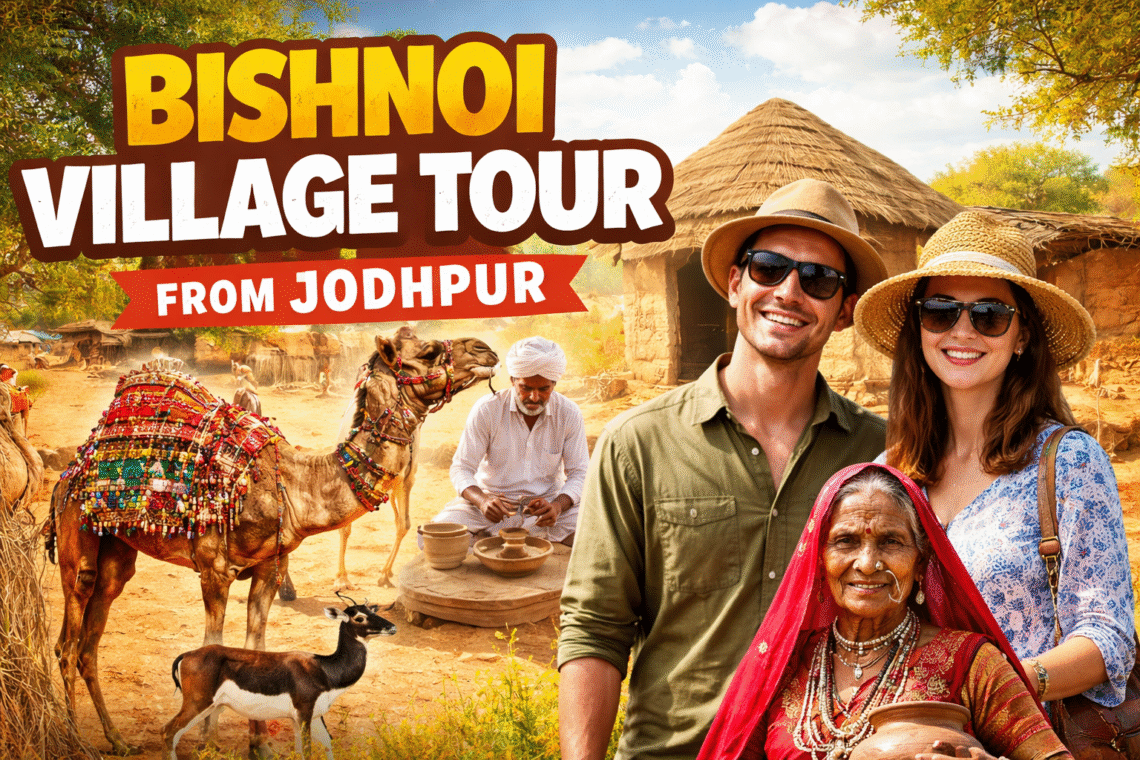
Engaging in a bishnoi village tour from jodhpur is the best way to understand this unique philosophy. During these excursions, you will see how the community coexists with animals like the chinkara and the desert fox. For the Bishnoi, protecting a tree or an animal is a sacred duty, often pursued with a level of devotion that is deeply moving to witness. These tours often include visits to Guda Bishnoi Lake, a natural watering hole where migratory birds and local wildlife gather, providing excellent opportunities for nature photography.
Artisans and Traditional Craftsmanship
The villages surrounding Jodhpur serve as the backbone of Rajasthan’s world-renowned handicraft industry. Each village often specializes in a specific craft, passed down through generations of families. For instance, the village of Salawas is famous for its “Durry” (rug) weaving. Here, weavers use manual looms to create intricate patterns that represent the colors of the desert.
In other nearby hamlets, you can find potters working their wheels with incredible precision or block printers creating vibrant textiles using natural dyes. Visiting these workshops allows you to see the labor-intensive process behind the products sold in high-end boutiques. Supporting these local artisans directly ensures that these traditional skills continue to thrive in a modern world dominated by mass production.
Culinary Traditions of the Countryside
The food in Jodhpur’s rural belt is a testament to human ingenuity in an arid climate. Because water and fresh vegetables were historically scarce, the local cuisine relies heavily on milk products, lentils, and sun-dried berries.
A typical village meal might include Bajra ki Roti (pearl millet flatbread) cooked over a wood-fire stove, served with Ker Sangri—a dish made from desert beans and berries. The smoky flavor of food cooked in a traditional chulha is incomparable. For those seeking a truly authentic experience, many village families host lunch sessions where travelers can sit on the floor and enjoy a wholesome, home-cooked Marwari meal. This culinary journey is often the highlight of any cultural escape, offering flavors that are bold, spicy, and deeply satisfying.
Planning Your Rural Journey
When planning a trip to these traditional villages, timing is essential. The best months to visit are from October to March when the weather is pleasant and conducive to outdoor exploration. During this time, the desert air is crisp, and the sun is not overbearing, making it ideal for walking through the sandy lanes of the settlements.
To make the most of your trip, it is highly recommended to use a professional transportation provider like Cab Taxi Service Jodhpur. Their drivers are often familiar with the nuances of the rural landscape and can act as informal guides, helping you bridge the communication gap with villagers. Using a professional service also provides the safety and comfort needed for a full day of desert travel.
Embracing a Slower Pace of Life
The true value of a cultural escape is the mental clarity it provides. In the villages outside Jodhpur, there is no rush. You might find yourself sitting under a Khejri tree, sipping masala chai while watching a herd of goats pass by. It is a place where you can disconnect from digital distractions and reconnect with the basic elements of life.
Whether you are watching a potter shape clay or witnessing a traditional opium ceremony (a cultural ritual for welcoming guests in some communities), the experience is transformative. You leave the villages not just with souvenirs, but with a deeper respect for a culture that values nature and tradition above all else. This rural detour is not just a sightseeing trip; it is an invitation to witness the enduring spirit of Rajasthan.