Planning a family journey through Rajasthan connects you directly with centuries of history, architectural marvels, and vibrant local traditions. Driving across the state offers flexibility that train schedules and flights cannot match, particularly when traveling with children or elderly relatives who benefit from unhurried rest stops and scenic detours. Covering roughly four hundred kilometers between the City of Lakes and the Pink City allows travelers to observe changing topographies, arid rural hamlets, and historic forts rising above rocky ridges. When curating such an expedition, choosing a dependable cab service in Udaipur guarantees clean vehicles, experienced chauffeurs accustomed to highway dynamics, and peace of mind from pickup to drop-off.
Understanding the Route and Travel Dynamics
The standard driving route from Udaipur to Jaipur connects via National Highway 58 and National Highway 48, passing key towns such as Chittorgarh, Bhilwara, and Kishangarh. The highway network is largely well-paved, featuring four-lane to six-lane stretches that maintain smooth cruising speeds. A direct non-stop drive requires approximately six to seven hours under typical traffic conditions. However, transforming this transit into an engaging three-day itinerary ensures family members experience historical landmarks without feeling rushed or physically exhausted. For larger family gatherings or joint travel groups carrying extensive luggage, reserving a spacious tempo traveller in Udaipur offers ample legroom, individual pushback seating, and dedicated luggage compartments, making prolonged travel effortless for every generation.
Day 1: Departure from Udaipur and the Grandeur of Chittorgarh
The first day begins with an early morning start from Udaipur to bypass urban bottlenecks. After a wholesome breakfast, set out toward the historic fortress town of Chittorgarh, situated roughly two hours away. As the capital of the historic Mewar kingdom, Chittorgarh Fort stands as an expansive UNESCO World Heritage site perched high upon a limestone plateau. Exploring the massive complex by vehicle allows families to comfortably visit major vantage points, including the towering Vijay Stambha, the intricately sculpted Kirti Stambha, and the historic palace grounds surrounded by defensive ramparts. Local guides stationed at the gates can narrate historical accounts of Rajput valor and architectural engineering, offering enriching context for younger family members. Following lunch at an authentic highway restaurant featuring fresh Rajasthani fare such as dal baati churma and spiced lentils, continue along the highway toward the textile hub of Bhilwara. Arriving by late afternoon allows time to check into your pre-arranged hotel, unwind after the initial road leg, and browse local markets known throughout India for traditional cotton weaves and fabrics.
Day 2: Spiritual Detours through Ajmer and Pushkar
On the second morning, depart Bhilwara and proceed northward toward the sacred twin cities of Ajmer and Pushkar. Driving through this sector reveals pastoral rural landscapes dotted with khejri trees and camel carts. Upon reaching Ajmer, pay a visit to the revered Dargah Sharif of Khwaja Moinuddin Chishti, a prominent pilgrimage site celebrated for architectural balance, marble courtyards, and communal harmony. After walking through the surrounding lanes, take a scenic drive over the Nag Pahar hills into the quiet valley of Pushkar. Centered around a sacred holy lake bordered by fifty-two stone ghats, Pushkar offers an atmospheric atmosphere filled with devotional chants and temple bells. Visit the rare Jagatpita Brahma Temple, explore the cobblestone lanes lined with local handicraft stalls, and pause at a lake-facing rooftop cafe for freshly brewed chai and local malpuas. By mid-afternoon, resume the journey toward Jaipur via Kishangarh, famously renowned for its extensive marble processing hub and picturesque white marble dumping yards. Approaching Jaipur by evening, check into your heritage property or hotel, where a relaxed dinner prepares everyone for the city tour ahead.
Day 3: Exploring Jaipur and Royal Monuments
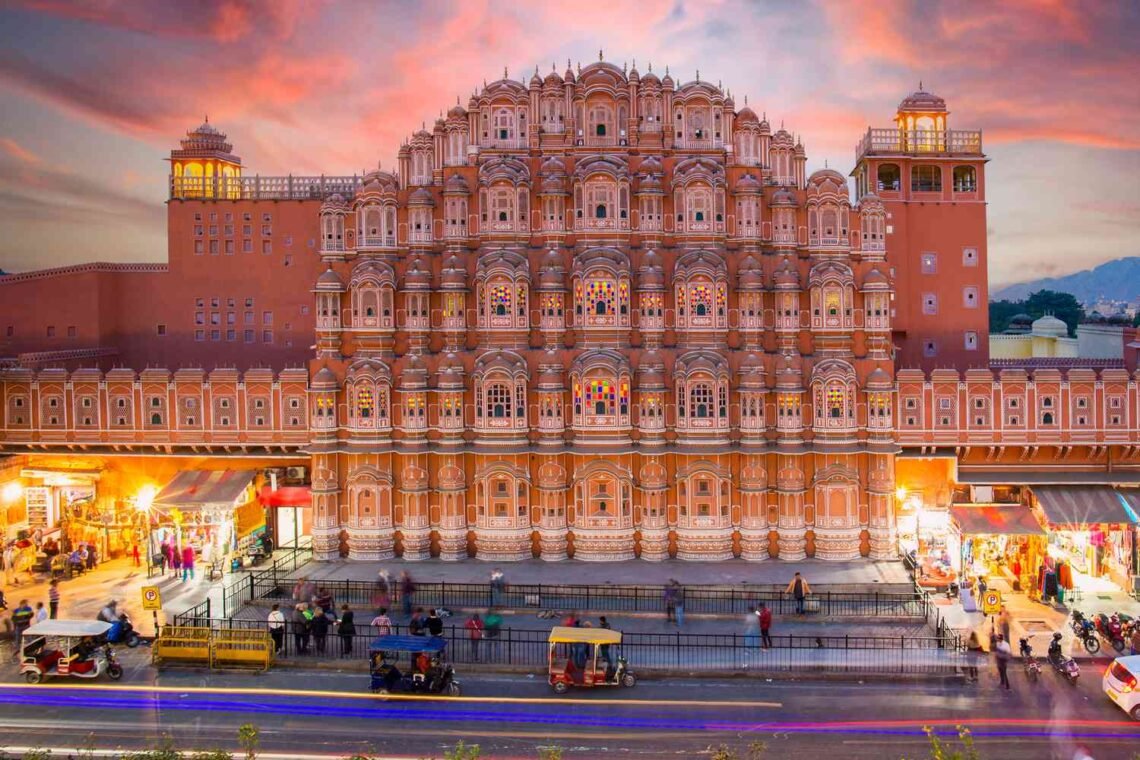
The concluding day is dedicated to uncovering the artistic and architectural treasures of Rajasthan’s capital. Reserving a dedicated Udaipur to Jaipur sightseeing tour enables families to navigate busy urban streets efficiently, moving smoothly between scattered forts and palaces. Begin early at the Amber Fort, situated in Amer just north of the city center. The massive stronghold features intricate mirror-work inside the Sheesh Mahal, manicured Rajput gardens, and sprawling courtyards that capture panoramic views of Maota Lake below. On the return drive toward the walled old city, make a brief photo stop along the promenade overlooking Jal Mahal, the floating palace situated in Man Sagar Lake. In the afternoon, explore the City Palace complex, which continues to house royal family residences alongside museum galleries showcasing ceremonial garments, weaponry, and royal carriage collections. Directly opposite stands Jantar Mantar, the historic eighteenth-century astronomical observatory that houses the world’s largest stone sundial. Complete the day admiring the distinctive pink sandstone facade of Hawa Mahal, whose hundreds of screened jharokha windows permitted royal ladies to observe street processions while maintaining privacy. Conclude the sightseeing journey with an evening shopping excursion in Johari Bazaar and Bapu Bazaar, purchasing hand-block printed textiles, blue pottery, and lac bangles as enduring keepsakes of your royal road trip.