The Essence of the Bishnoi Village Safari
Stepping into the outskirts of Jodhpur is like entering a living museum where nature and culture exist in a delicate, beautiful balance. The Bishnoi Village Safari is not just a typical sightseeing trip; it is an immersive journey into the soul of Rajasthan. The Bishnoi community, often called the “world’s first environmentalists,” has dedicated centuries to the protection of trees and wildlife. For any traveler visiting the Blue City, exploring these rural landscapes offers a profound contrast to the bustling urban markets and towering forts.
The safari provides a rare glimpse into a lifestyle defined by simplicity and a deep-rooted spiritual connection to the earth. Whether you are an avid photographer, a textile enthusiast, or someone seeking a quiet escape, the arid plains surrounding Jodhpur hold stories that deserve to be heard. To make the most of this experience, many travelers rely on a professional jodhpur taxi service to navigate the sandy terrains and reach the heart of the villages comfortably.
Wildlife Photography in the Thar Desert
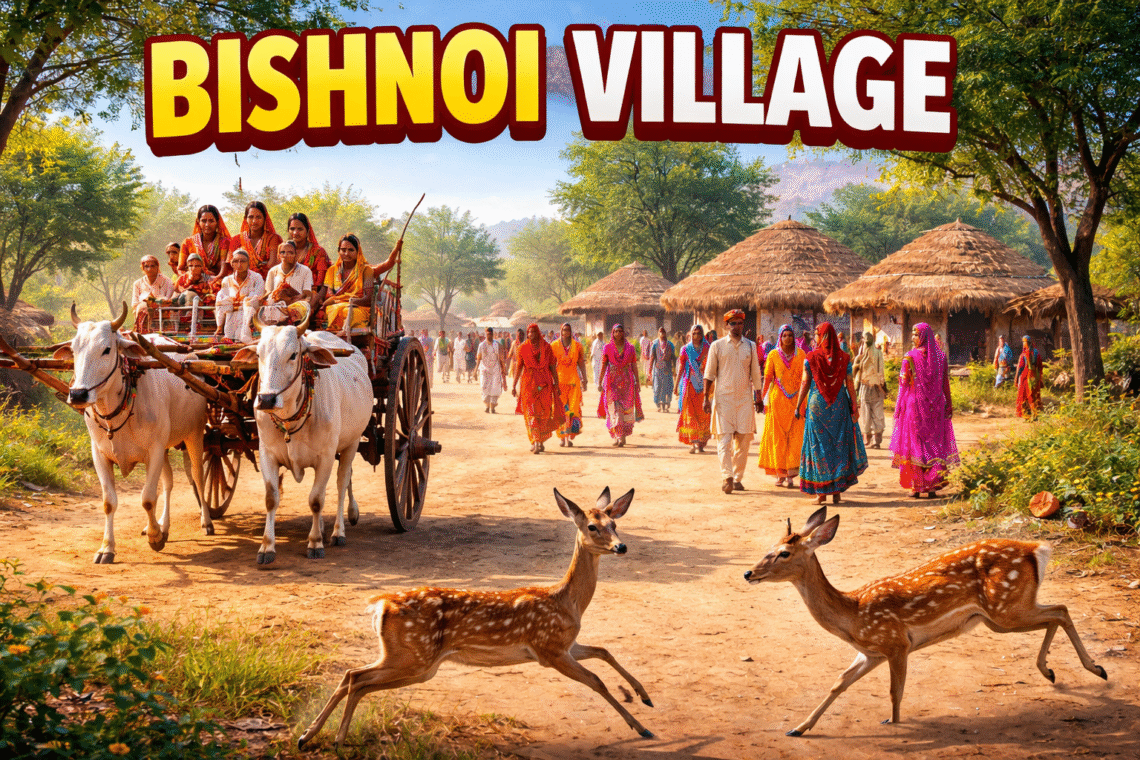
The Bishnoi region is a sanctuary for biodiversity, largely due to the community’s strict religious tenets that forbid the killing of animals. This creates a unique environment where wildlife does not flee at the sight of humans, allowing for unparalleled photography opportunities. As you traverse the scrub forests and open plains, the most iconic sight is the Blackbuck, India’s elegant spiral-horned antelope. These creatures are considered sacred by the Bishnoi, and seeing them graze peacefully near human settlements is a testament to the harmony of the region.
Beyond the Blackbucks, the safari frequently reveals Chinkaras (Indian Gazelles), desert foxes, and blue bulls (Nilgai). For birdwatchers, the Guda Bishnoi Lake is a seasonal paradise. During the winter months, the lake becomes a hub for migratory birds, including cranes and various species of waterfowl. Capturing the golden hour light hitting the ripples of the lake while a demoiselle crane takes flight is a dream for any wildlife photographer. The rugged, sun-drenched landscape provides a dramatic backdrop for portraits of both the flora and the fauna of the Thar.
The Art of Traditional Local Crafts
While the wildlife captures the eyes, the local craftsmanship captures the heart. The villages surrounding Jodhpur are hubs of ancient artistic traditions that have been passed down through generations. One of the most famous stops on any safari is the Patochi village, known for its exquisite hand-block printing and durry (rug) weaving.
The durries are woven using manual looms, often featuring geometric patterns and earthy tones derived from natural dyes. Watching a master weaver at work is a lesson in patience and precision. Similarly, the pottery villages offer a hands-on experience. The local potters use traditional wheels to create functional art from clay, and visitors are often invited to try their hand at shaping a vessel. These crafts are more than just souvenirs; they are the primary livelihood for many families and a vital part of Rajasthan’s cultural identity. Supporting these artisans directly ensures that these ancient techniques do not fade away in the age of industrialization.
Cultural Rituals and the Opium Ceremony
A significant highlight of the Bishnoi Village Safari is the opportunity to witness the traditional Opium Ceremony (Amal Sabha). Historically, opium has played a role in the social and religious fabric of the desert communities, used as a gesture of hospitality and during reconciliation between families. While the practice is strictly regulated and symbolic today, witnessing the ritual offers insight into the complex social hierarchies and customs of the elders.
Beyond the ceremony, interacting with the Bishnoi people reveals their “29 principles,” which include a mandate to be compassionate toward all living beings. Their homes, often made of mud and topped with thatched roofs, are remarkably clean and eco-friendly. The women, dressed in vibrant poshak and traditional jewelry, manage the households with incredible efficiency, often participating in the craft-making processes that sustain the village economy.
Planning Your Journey with Jodhpur Taxi Safe Tour
Navigating the rural landscape of Rajasthan requires local expertise and reliable transportation. To truly appreciate the nuances of the desert, it is best to travel with guides who understand the terrain and the cultural etiquette of the villages. Jodhpur Taxi Safe Tour specializes in providing authentic experiences that go beyond the standard tourist trail. Their drivers are well-versed in the secret spots where wildlife is most active and the specific households where the finest crafts are produced.
Choosing a guided jodhpur to bishnoi village tour ensures that you are not just a spectator but a respectful guest. The company prioritizes safety and punctuality, allowing you to focus entirely on the sights and sounds of the desert. Whether you are traveling solo, as a couple, or with a family, having a private vehicle allows for the flexibility to stop for a perfect photo or spend extra time learning from a local potter.
Conservation as a Way of Life
The most enduring lesson of the Bishnoi Village Safari is the realization that conservation is not a modern movement, but an ancient way of life. The story of the Khejarli massacre, where hundreds of Bishnois sacrificed their lives to protect trees from being cut down by a king’s army, still resonates in the region today. This legacy of bravery and environmental stewardship is palpable in every corner of the village.
By visiting these communities, travelers contribute to a form of sustainable tourism that rewards conservation efforts. It encourages the younger generation to maintain their traditions and protect their local ecosystem. As you head back toward the city lights of Jodhpur, you carry with you more than just photographs and rugs; you carry a renewed perspective on what it means to live in balance with the natural world.