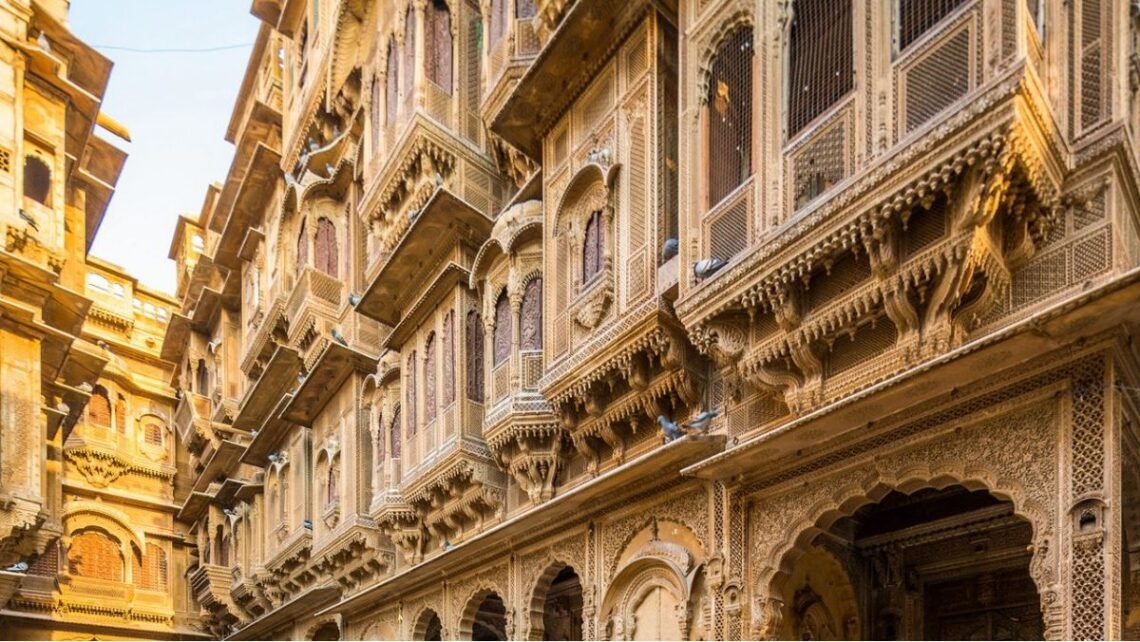
Tucked within the narrow, winding alleys of the Golden City, Patwon Ki Haveli stands as an undeniable masterclass in Rajasthani sandstone craftsmanship. While modern travelers often associate the Thar Desert purely with sweeping sand dunes, Jaisalmer’s true cultural foundation lies etched into the intricate stone walls of its ancient townhouses. Among the city’s residential landmarks, none rivals the sheer artistic scale and commercial heritage of this five-structure complex. As desert hospitality specialists who frequently introduce international travelers and cultural enthusiasts to the living heritage of western Rajasthan, we have curated this on-ground guide to exploring the history, architecture, and visitor nuances of Patwon Ki Haveli.
The Merchant Legacy Behind the Golden Facades
Patwon Ki Haveli, known locally as the Mansion of Brocade Merchants, owes its creation to Guman Chand Patwa, an exceptionally prosperous trader of jewellery, fine brocades, and opium. Begun in 1805, the construction of this sprawling mansion took nearly five decades to finish. Guman Chand envisioned an interconnected enclave where each of his five sons would possess a private, multi-storey residence, reflecting both personal wealth and collective family pride.
The Patwa family operated extensive trade routes that stretched beyond the Indian subcontinent into Central Asia and China. Their cross-border mercantile success financed an unprecedented level of craftsmanship. Local master masons (known historically as Silawats) were commissioned to carve yellow sandstone with the delicate precision usually reserved for wood or ivory. Walking into the narrow courtyard today immediately reveals how the complex was designed: private living quarters stacked vertically around central air wells, keeping the residences naturally cool against the fierce desert sun while presenting an imposing, unbroken facade to the public street.
Architectural Brilliance: Jharokhas, Frescoes, and Stone Lace
The architecture of Patwon Ki Haveli represents the zenith of Jaisalmer stone masonry. From street level, the building commands attention through its sheer density of decorative details:
- Over sixty uniquely carved jharokhas (overhanging enclosed balconies) line the outer facade, designed both to catch cooling desert breezes and to allow female residents of the household to view street processions without being observed from outside.
- Pierced stone latticework screens (jaalis) diffuse harsh daytime sunlight into gentle, patterned illumination across interior marble and stone floors.
- Ceilings across the upper storeys feature intricate gold-leaf work, mirror mosaics, and tempera wall paintings that blend Rajput iconography with subtle Mughal court influences.
- Underground rooms and narrow wooden staircases reflect the security needs of wealthy 19th-century merchants who guarded high-value inventory beneath their living quarters.
The first haveli, now under private preservation, functions as a private museum curated with period furniture, silver artifacts, and traditional turbans. The remaining four units fall under the administration of the Archaeological Survey of India (ASI) and the state department, safeguarding authentic murals that showcase the lifestyle, attire, and international interactions of Jaisalmer’s merchant elite.
Practical Visitor Guide: Timing, Fees, and Preservation Etiquette
Planning your visit with local context ensures an immersive experience without the rush of peak tourist crowds:
- Location and Access: Situated near the Patwa Complex in the old city, the haveli sits inside pedestrianized lanes. Autos can drop visitors near the main gate, after which a brief two-minute walk brings you directly to the entrance.
- Best Hours to Visit: Arrive between 9:00 AM and 10:30 AM. Early morning sunlight strikes the eastern facade at an angle that accentuates every deep stone carving, while interior courtyards remain pleasantly cool and quiet.
- Photography Guidance: The third-floor corridors offer symmetrical viewpoints framing the golden stone arches against open desert skies. Flash photography is prohibited inside painted chambers to preserve delicate historic pigments.
- Guided Exploration: Exploring with a certified local guide or an ASI-approved audio device reveals subtle details, such as hidden vaults beneath wooden floorboards and symbolic carvings hidden within pillar capitals.
Seamless Heritage and Desert Luxury
A complete journey through Jaisalmer balances architectural history with the raw beauty of the Thar. After spending your morning tracing merchant history through stone-carved balconies, shifting your base toward the quiet perimeter of the dunes creates an authentic desert retreat. Travelers seeking an elevated stay often reserve a luxury camp in Jaisalmer to unwind amidst five-star tented comfort, folk performances, and quiet desert evenings under the stars.
From your desert base, pairing deep architectural sightseeing with outdoor pursuits completes the royal Rajasthani itinerary. Beyond haveli explorations, venturing into the dunes allows you to participate in curated Jaisalmer adventure activites such as guided dune bashing, camel safaris, and quad biking across remote sand ridges. This seamless contrast between 19th-century urban opulence and the quiet vastness of the Thar Desert captures the true spirit of western Rajasthan.