The golden city of Jaisalmer rises out of the Thar Desert like a sculpted mirage, drawing travelers from across the globe with its sandstone ramparts, intricate havelis, and sweeping dunes. While peak winter between November and February is universally recognized as the prime season to explore western Rajasthan, budget travelers often wonder whether the destination remains accessible when seasonal demand surges. Navigating peak-season pricing requires strategic planning, local insight, and an understanding of where value truly lies. A grounded evaluation reveals that exploring Jaisalmer during the colder months on a modest budget is not only viable, but remarkably rewarding when approached with intentionality.
The Reality of Winter Costs in the Golden City
Winter transforms the harsh desert climate into pleasant, crisp days hovering between 20°C and 25°C, accompanied by cold nights that drop below 8°C. This comfortable weather makes outdoor exploration effortless, but it also brings high-season hotel tariffs and peak activity rates. Independent travelers often face inflated prices for standard desert safaris and boutique heritage stays inside the fort.
The secret to keeping expenses low during this peak window lies in booking well in advance and sidestepping the luxury tourist enclaves. Budget guesthouses located right outside the fort walls—in neighborhoods like Gopa Chowk, Dhibba Para, and near Gadisar Lake—maintain fair rates even in December and January. Many traditional homestays offer authentic rooftop views, warm hospitality, and home-cooked meals for a fraction of the cost of luxury desert resorts. Partnering with a verified tour operator in Rajasthan can also unlock consolidated group rates for transport and sightseeing that individual travelers rarely access independently.
Exploring Forts and Havelis Without Breaking the Bank
One of Jaisalmer’s greatest advantages for cost-conscious travelers is that its primary architectural wonders can be appreciated on foot. Unlike many forts in India that operate purely as ticketed monuments, Jaisalmer Fort—Sonar Qila—is a living citadel housing approximately one-fourth of the old city’s population. Walking through its winding lanes, admiring ancient carved balconies, and soaking in panoramic bastion viewpoints costs nothing.
- Jaisalmer Fort Ramparts: Wandering through the living alleys, community squares, and cannon bastions is completely free of charge, offering unmatched historical atmosphere.
- The Seven Jain Temples: Nestled within the fort complex, these 12th-to-15th-century marvels charge a nominal entry fee and showcase some of the finest marble and sandstone carvings in India.
- Intricate Havelis: Exterior viewings of Patwon Ki Haveli, Salim Singh Ki Haveli, and Nathmal Ki Haveli allow visitors to admire ornate jharokhas directly from street level without buying every interior museum ticket.
- Gadisar Lake Sunrise: A peaceful, free-to-visit 14th-century artificial reservoir surrounded by arched shrines, chhatris, and migrating winter birds.
By curating an itinerary centered on architectural walking tours, travelers experience the depth of a traditional Rajasthan heritage tour while keeping daily monument expenditures to an absolute minimum.
Experiencing the Desert Dunes on a Sensible Budget
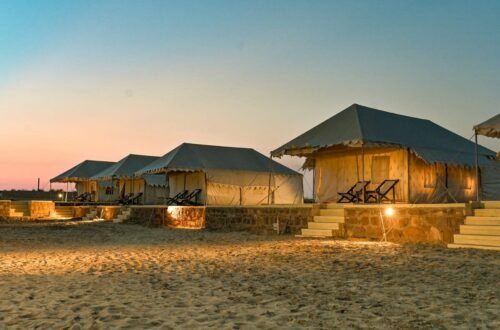
A trip to Jaisalmer feels incomplete without setting foot on the Thar Desert sands, yet commercial luxury camps at Sam Sand Dunes can quickly deplete a modest travel fund. Standard luxury packages bundle Swiss tents, cultural shows, buffet dinners, and camel rides at premium winter rates.
Budget travelers can circumvent these steep expenses by opting for day-safaris rather than luxury overnight stays, or by visiting less commercialized desert pockets like the Khuri Sand Dunes. Khuri offers an authentic glimpse into desert village culture with tranquil, uncluttered dunes located roughly 45 kilometers from the city center. Public state buses and shared jeeps run regularly between Jaisalmer and Khuri, allowing independent travelers to bypass private taxi markups.
For those who prioritize experiencing sweeping sand ridges, sunset vistas, and thrilling dune traversing without unnecessary frills, joining a shared Rajasthan desert adventure tour provides the logistics, transfers, and desert experiences at fixed, transparent rates that safeguard a traveler’s budget.
Eating Well and Spending Less on Local Cuisine
Food in Jaisalmer is hearty, aromatic, and remarkably cost-effective if you steer clear of tourist-targeted multi-cuisine cafes. Local dhabas, heritage street stalls, and small family-run eateries deliver authentic Marwari culinary traditions at everyday local prices.
- Dal Baati Churma: Savoring a wholesome traditional thali at a busy neighborhood Bhojanalaya provides a nutritious, filling meal for a nominal cost.
- Ker Sangri and Gatte Ki Sabzi: Classic desert preparations crafted from indigenous desert beans and gram flour, best enjoyed with freshly baked bajra rotis slathered in homemade ghee.
- Local Street Snacks: Start crisp winter mornings with piping hot pyaaz kachoris, mirchi vadas, and fresh masala chai from stalls clustered around Amar Sagar Pol.
- Ghotua Laddoo: A signature local sweet made from roasted gram flour, mawa, and dry fruits, available at historic confectioneries near the city center.
Essential Practical Advice for Budget Visitors
To maximize every rupee during a winter visit, arriving via the Indian Railways network provides direct, comfortable, and affordable transit directly to Jaisalmer Station from major hubs like Delhi, Jaipur, and Jodhpur. Night sleeper trains save travelers the cost of an extra night’s hotel accommodation while preserving daylight hours for exploration.
Within the city, distances between major attractions are modest. The entire perimeter from Gadisar Lake to the Fort entrance and surrounding havelis is walkable, meaning daily auto-rickshaw fares can be eliminated entirely with a sturdy pair of walking shoes. For journeys out to Kuldhara abandoned village, Bada Bagh, or the dunes, pooling costs with fellow travelers met at guesthouses significantly slashes per-person vehicle hiring expenses.
Jaisalmer in winter delivers an extraordinary return on investment for the budget traveler. By prioritizing historical walking routes, embracing authentic regional eateries, and adopting sensible approaches to desert exploration, you can fully immerse yourself in the desert culture without exceeding reasonable financial limits.