Transitioning from the bustling bazaars of Rajasthan’s capital to the ancient dry deciduous forests of Sawai Madhopur is one of North India’s most compelling road journeys. Covering roughly 180 kilometers, the route takes travelers from vibrant city avenues through pastoral agrarian villages right to the fringes of tiger country. Whether you set out by private cab, self-drive, or direct train to Sawai Madhopur, taking time to explore along the way transforms a simple transit day into a comprehensive cultural and wildlife expedition.
Choosing the Best Route from Jaipur to Sawai Madhopur
Travelers generally choose between two highway corridors when departing Jaipur for the national park. The primary route runs southward along National Highway 52 through the heritage-rich town of Tonk before branching southeast toward Sawai Madhopur along State Highway 117. This corridor covers approximately 160 to 180 kilometers and usually takes three and a half hours, featuring divided four-lane tarmac, reliable fuel stations, and roadside dhabas serving fresh buttermilk and hot pyaaz kachoris.
The alternative approach diverges via National Highway 21 through Dausa, cutting south across Lalsot toward Sawai Madhopur. This route extends the drive closer to four hours across roughly 190 kilometers, yet it appeals to history lovers who appreciate quiet rural countryside and ancient architecture. Those driving this way can take a brief morning detour toward Abhaneri to see the massive steps of Chand Baori before turning toward the Vindhya and Aravalli ranges.
Sights and Cultural Stops Along the Highway
Pausing at cultural stops turns the highway journey into an engaging sightseeing circuit. The historic settlement of Tonk, once an 18th-century princely state ruled by Pathan nawabs, features unique architecture that contrasts distinctly with the Rajput fortresses seen in Jaipur. Sunehri Kothal, also known as the Mansion of Gold, contains intricate glass inlay work, gold leaf ceilings, and painted floral arabesques that provide a quick architectural pause.
Continuing southward, the open highway cuts across rural croplands of mustard, wheat, and guava orchards. Drivers frequently pull over near the Banas River basin or rustic roadside tea stalls where village elders gather under banyan trees. If you prefer rail travel over the road, direct express trains run from Jaipur Junction to Sawai Madhopur Railway Station in just over two hours. The railway station itself is an open-air art gallery, decorated with detailed murals of tigers, banyan trees, and chital deer painted by traditional local Ranthambore folk artists.
Iconic Attractions in Ranthambore
Upon reaching the wilderness, sightseeing shifts from highway landscapes to historic ruins and dramatic ravines. A premier resort in Ranthambore provides a peaceful base nestled in native flora, allowing guests to relax with traditional Rajasthani cuisine and clear desert night skies.
Dominating the national park’s horizon is the 10th-century Ranthambore Fort, recognized as a UNESCO World Heritage site. Positioned atop an 700-foot cliff within the forest canopy, the fort shelters the Trinetra Ganesh Temple, ancient stepwells, and stone pavilions where langurs play and panoramic views reveal the jungle below. Wildlife enthusiasts often add visits to Padam Talao, the park’s largest lake framed by the historic Jogi Mahal, as well as the quiet Kachida Valley known for its rocky outcrops. Craft lovers can also stop at the Dastkar Ranthambore cooperative to see local women practicing block printing, patchwork, and pottery that support village conservation livelihoods.
Planning Safaris and Wildlife Expeditions
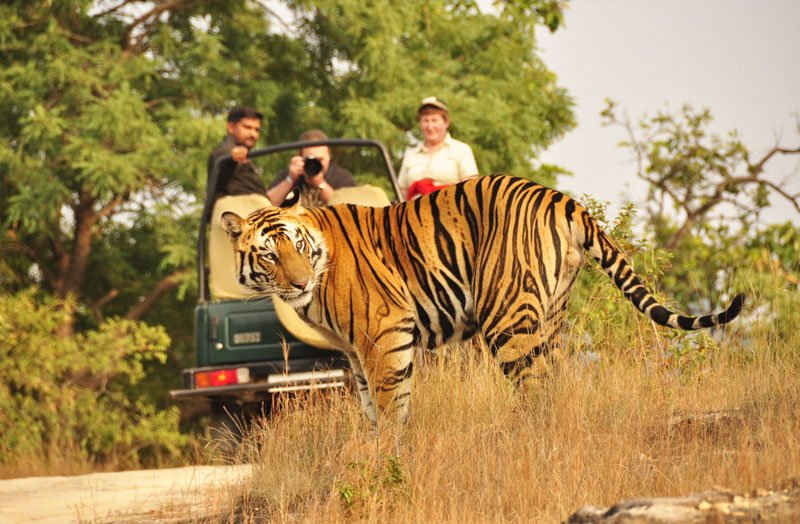
Experiencing the wildlife requires advance planning with Rajasthan’s Forest Department, as park entries adhere to strict zone allocations and daily vehicle quotas. Reserving a dedicated Jeep safari in Ranthambore provides six-seater open-top 4×4 Gypsy vehicles that navigate narrow rocky trails quietly, offering exceptional mobility for photographers tracking Bengal tigers, sloth bears, Indian leopards, and marsh crocodiles. Morning safaris begin as the sun rises over the mist-covered lakes, while afternoon drives capture the golden hour across the dhok forests.
Couples and weekend travelers seeking an organized journey often prefer bundled arrangements that coordinate luxury stays, meals, and park permits seamlessly. Reserving a curated Ranthanbore 2N 3D Couple Package ensures private transfers, guided forest drives, and historic fort excursions are structured without the stress of independent booking. Visiting between October and April guarantees comfortable weather, clear daylight for sightseeing, and an unforgettable journey from the Pink City into the wild.