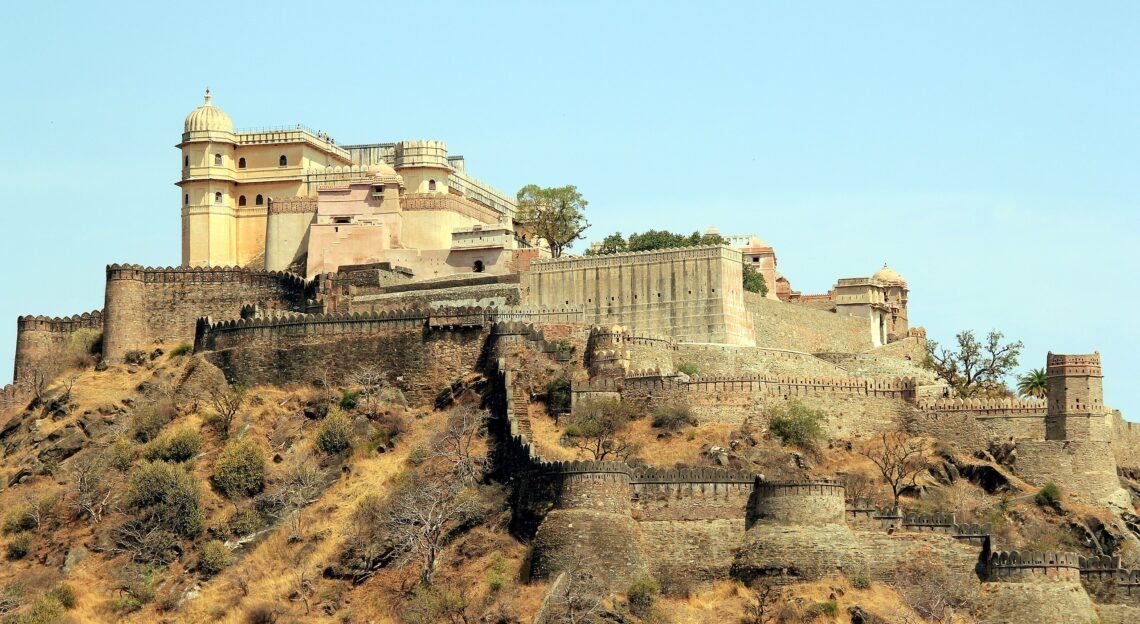
Kumbhalgarh stands out among the historic landscapes of western India, perched high in the rugged Aravalli range in southern Rajasthan. Built during the 15th century by Rana Kumbha, this UNESCO World Heritage Site preserves a dramatic blend of Rajput military architecture, untouched scrub forests, and ancient Jain shrines. For travelers planning a quick weekend escape, navigating the terrain efficiently ensures you experience the architectural marvels, local gastronomy, and rich ecology without feeling rushed. This curated 48-hour itinerary organizes each segment of your journey to maximize both relaxation and exploration.
Day 1: Arrival, Fortress Ramparts, and Sunset Vistas
Morning: Arrival and Check-In
Most visitors approach Kumbhalgarh by road from Udaipur, a picturesque drive of approximately two to two-and-a-half hours winding through scenic mountain passes. Aim to arrive at your resort by late morning to settle in smoothly before the afternoon heat sets in. Those who appreciate refined architectural design, personalized care, and authentic Mewari dining can explore luxury hotels in Rajasthan that capture the royal heritage of the region. After unpacking, enjoy a leisurely lunch featuring traditional Mewari staples such as ker sangri, gatte ki sabzi, and hot rotis brushed with desi ghee.
Afternoon: Ascending Kumbhalgarh Fort
Begin your cultural exploration around 2:30 PM by visiting Kumbhalgarh Fort. The perimeter wall stretches over 36 kilometers, making it the second-longest continuous wall in the world after the Great Wall of China. Wear sturdy walking shoes with strong traction, as the stone pathways leading up to the main citadel are steep.
Enter through Ram Pol, the main southern entrance, and take time to inspect the defensive bastions engineered to repel cavalry and artillery. Inside the fortress complex, more than 360 temples stand scattered across the valley floor, with roughly 300 dedicated to Jain tirthankaras and the remainder to Hindu deities. The circular architecture of the Vedi Temple and the multi-tiered carvings of the Neelkanth Mahadev Temple deserve close inspection.
Late Afternoon: Badal Mahal
Continue climbing toward the uppermost structure of the fort, known as Badal Mahal or the Palace of Clouds. Built in the late 19th century by Maharana Fateh Singh, this two-story palace features distinct sections: the Zanana Mahal for royal women and the Mardana Mahal for men. The walls display pastel-toned 19th-century frescoes depicting hunting scenes and floral motifs. From the rooftop terrace, you gain an unobstructed 360-degree view spanning the dense forests of the wildlife sanctuary on one side and the arid plains of Marwar on the other. This vantage point offers one of the finest sunset settings in Rajasthan.
Evening: The Sound and Light Show
As dusk falls, make your way back down to the central courtyard near the main gate. Every evening after sunset, the Rajasthan Tourism Development Corporation hosts an informative 45-minute sound and light show. The presentation narrates the martial history of Mewar, detailing the valor of Rana Kumbha, the tactical defensive design of the fort, and the birth of Maharana Pratap within these walls. Seeing the stone ramparts illuminated against the night sky provides a striking close to your first day. Return to your retreat for dinner and an early night.
Day 2: Wildlife Encounters, Jungle Safaris, and Ancient Architecture
Early Morning: Kumbhalgarh Wildlife Sanctuary Safari
Set an early alarm for a morning safari through the Kumbhalgarh Wildlife Sanctuary. The sanctuary spans across 610 square kilometers of deciduous woodland and scrub, creating a crucial corridor for apex predators and native herbivores. Jeep safaris typically depart near sunrise, entering through either the Kumbhalgarh or Ranakpur gates.
Keep your eyes open for the Indian wolf, an elusive predator that thrives in this rugged terrain, along with leopards, striped hyenas, sloth bears, sambar deer, chinkaras, and four-horned antelopes. Birdwatchers should scan the canopies for grey junglefowl, white-bellied minivets, and crested serpent eagles. The fresh morning air and mist rising off the granite hills provide a peaceful change of pace from standard sightseeing.
Mid-Day: Local Hospitality and Relaxation
Return to your accommodation by mid-morning for breakfast. Taking advantage of professional hospitality services in Kumbhalgarh allows travelers to unwind completely, whether that means booking an Ayurvedic wellness session, resting beside the pool, or enjoying a curated tea tasting overlooking the forest canopy.
Afternoon: Excursion to Ranakpur Jain Temple
After checking out, take the scenic 50-kilometer drive down the western slopes of the Aravalli hills to Ranakpur. Constructed in the 15th century during Rana Kumbha’s reign, the Ranakpur Chaturmukha Dharan Vihar stands as a masterpiece of Jain marble architecture.
The temple complex rests on a raised stone plinth and features 1,444 uniquely carved marble pillars, each displaying distinct artisan motifs with no two pillars sharing the exact same design. The central sanctum houses a four-faced idol of Lord Adinath, allowing devotees to view the deity from all cardinal directions. The intricate geometric carvings on the ceilings, along with the natural cooling effect produced by the open-air design, make this visit an unforgettable cultural finale.
Evening: Departure
Conclude your trip by beginning your return drive toward Udaipur, Jodhpur, or your onward transit hub as the sun sets behind the hills. A well-planned weekend in Kumbhalgarh balances historic curiosity with the rugged natural environment of southern Rajasthan.
Practical Tips for Your Weekend Trip
- The most favorable weather occurs between October and March, when daytime temperatures remain mild and evening winds stay cool.
- Carry a refillable water flask, sun protection, and a light jacket, as temperatures drop rapidly in the hills after sunset.
- Always hire certified local guides at the ticket counters of Kumbhalgarh Fort and Ranakpur to gain accurate historical context regarding architectural details and defense strategies.