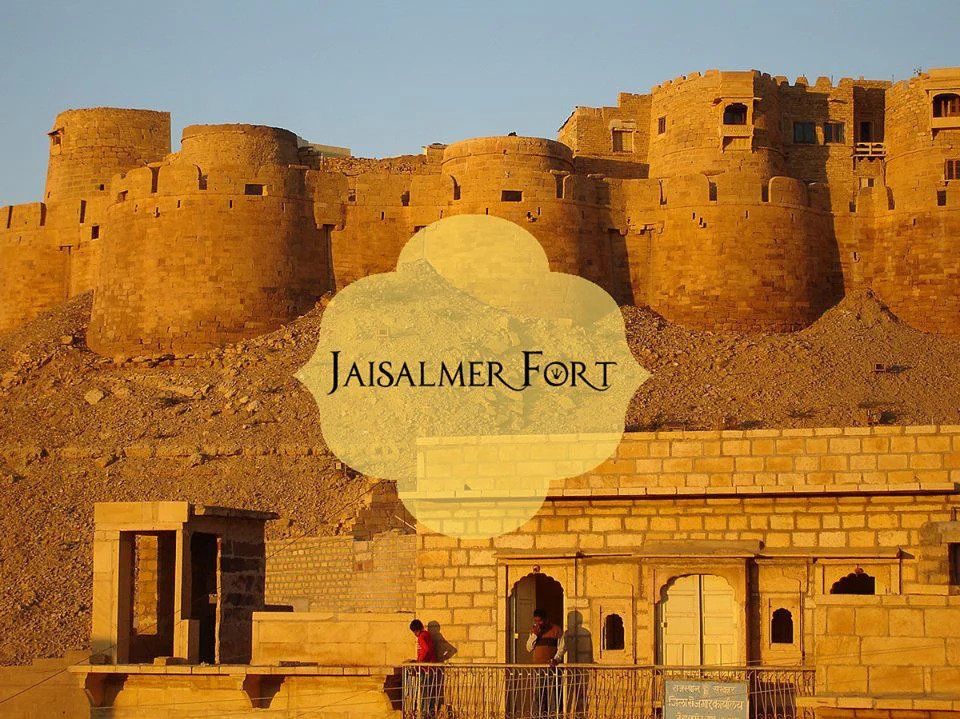
Rising majestically over the vast stretches of the Thar Desert, the historic citadel of Jaisalmer stands as a breathtaking tribute to medieval Rajput architecture. Constructed entirely out of golden-yellow sandstone, this structure shifts from a warm lion color during the daytime to a rich honey-gold as the sun dips below the horizon. Recognized globally as a UNESCO World Heritage Site under the Hill Forts of Rajasthan category, it represents one of the most structurally unique fortresses in human history. To experience this architectural wonder is to step directly into a living chronicle of ancient trade routes, legendary battles, and royal legacies.
The Ancient Roots and Founding History of the Fortress
The origins of this golden citadel date back to 1156 AD, when it was founded by Rawal Jaisal, a prominent Bhati Rajput ruler. Prior to establishing this stronghold, the Bhati clan ruled from their old capital at Lodhruva, located approximately 15 kilometers away. Seeking a more strategically sound and easily defensible location to safeguard his kingdom from rival clans, Rawal Jaisal sought out new territory. Legend states that he encountered a wise local hermit named Eesul on Trikuta Hill, who revealed a sacred prophecy linked to the land, prompting the king to build a massive mud fort on the massive hill. Over successive generations, this simple outpost evolved into a grand sandstone structure fortified with multiple defensive rings.
Positioned high above the surrounding landscape, the fortress played an incredibly vital role in geopolitical history. It served as an essential trading post on the lucrative Silk Road commercial routes that connected central India with central Asia and Persia. Massive merchant caravans loaded with expensive silks, rare spices, exotic indigo, and luxury goods regularly traveled through these harsh desert terrains. The rulers of the city grew immensely wealthy and powerful by levying strategic taxes on these transit caravans, transforming a remote desert outpost into a prosperous commercial hub.
Understanding the Architectural Marvel and Defensive Network
The architectural layout of the fortress reflects the brilliant ingenuity of medieval military engineers who mastered the art of dry-stone masonry. Built entirely without the use of mortar, the massive sandstone blocks are meticulously grooved and interlocked to form resilient structures. The entire fortress stretches approximately 1,500 feet in length and 750 feet in width, resting proudly on an elevated ridge rising 250 feet above the desert floor. This naturally commanding elevation provided the resident army with clear, panoramic views of the surrounding flat terrain, preventing unexpected enemy advances.
The defensive framework consists of a formidable triple-ringed defensive wall structure designed to withstand severe military sieges. The outermost defensive wall features a 15-foot-tall stone barrier designed to deflect initial ground attacks, while the inner walls feature an astonishing network of 99 massive bastions. Out of these 99 bastions, 92 were entirely reconstructed during the mid-17th century to reinforce structural integrity against heavy artillery. To enter the heart of the fortress, visitors must pass through a sequence of four massive, fortified stone gateways, known locally as Akshaye Pol, Suraj Pol, Ganesh Pol, and Hawa Pol, each specifically engineered with sharp blind curves to stop the momentum of charging enemy war elephants.
Key Sightseeing Attractions and Hidden Gems Inside the Walls
What makes this historic monument truly distinct from other architectural structures across India is that it remains a fully functioning, inhabited community. Nearly one-fourth of the old city’s population still resides permanently inside the ancient walls, making it the world’s most famous living fort. Exploring the narrow, winding cobblestone lanes reveals a vibrant community complete with ancestral homes, vibrant marketplaces, historical temples, and charming cafes.
The Raj Mahal Royal Palace Complex
Located at the main square of the inner courtyard is the magnificent Raj Mahal, the multi-storied former residence of the Maharawals of Jaisalmer. Built around the 16th century, this royal palace showcases spectacular stone carvings, ornate jharokhas or overhanging balconies, and beautifully preserved mirror work. The interior rooms house a well-curated museum displaying a collection of historic armor, royal artifacts, and miniature paintings detailing ancestral lineages.
The Interconnected Jain Temples
Dating between the 12th and 16th centuries, the cluster of seven interconnected Jain temples represents the peak of artistic craftsmanship within the monument. Dedicated to various Jain Tirthankaras, these shrines feature incredibly detailed ceiling carvings, beautifully sculpted pillars, and complex stone friezes carved from golden sandstone. The famous Sambhavanatha Temple houses thousands of ancient scripts and ancient idols, offering a peaceful sanctuary amidst the bustling energy of the living community.
The Historic Laxminath Temple
Constructed around 1494 AD, this Hindu temple is dedicated to Lord Vishnu and Goddess Lakshmi. It holds immense spiritual significance for the local residents, featuring an elegant arched gateway and beautifully adorned shrines that have served as the focal point of community worship for centuries.
Essential Visitor Travel Tips and Practical Guidelines
To fully appreciate the rich architectural heritage and historic ambiance of this desert citadel, careful preparation is highly recommended for travelers. The entire fort complex is open to the public twenty-four hours a day because it is an active residential zone, though individual temples and palaces maintain standard daytime operating hours. Plan to spend at least three to four hours walking through the pathways to adequately explore the major landmarks and photography spots.
- Footwear and Clothing: Wear durable, comfortable walking shoes since the ancient stone streets are uneven, steep, and entirely pedestrian-driven.
- Weather Awareness: The desert sun can be incredibly intense even during the winter months, making high-quality sun protection, hats, and constant hydration essential.
- Cultural Respect: Remember that you are walking through active residential neighborhoods; always ask for permission before photographing local homes or residents.
Transitioning from Historic Citadels to the Serene Desert Dunes
After spending a fascinating day uncovering the rich history and architectural heritage of the legendary Golden Fort Jaisalmer, the ultimate way to complete your Rajasthani journey is to fully immerse yourself in the natural tranquility of the Thar Desert. Leaving the bustling sandstone streets behind allows you to experience the vast expanse of sand dunes that once surrounded the ancient Silk Road traders.
For travelers who want a seamless desert adventure, choosing a structured itinerary like the popular 01 Night 2 Days Jaisalmer Group Package provides a comprehensive travel solution. This structured journey bridges the gap between urban heritage sightseeing and deep desert exploration, combining historic city tours with a magical evening under the stars.
To truly experience the authentic nomadic lifestyle of Rajasthan without sacrificing modern comforts, booking an overnight stay at a premium camp in Jaisalmer completes the true spirit of desert travel. Modern desert camps like Rajwada Desert Camp, located near the Sam Sand Dunes, provide a luxurious retreat featuring traditional Swiss tents, exciting camel safaris at sunset, cultural folk dance performances, and authentic local cuisine served around a crackling bonfire. Transitioning from the ancient walls of the fort to the shifting sands of the desert dunes ensures a complete, unforgettable journey into the heart of Rajasthan’s royal heritage.